

close
Choose Your Site
Global
Social Media


Views: 0 Author: Site Editor Publish Time: 2026-10-08 Origin: Site


Operator fatigue and cab safety depend heavily on reliable climate control. When an excavator AC system fails, it results in unscheduled downtime and immediate operator environment degradation. Cab temperatures easily exceed safe limits during summer grading or trenching operations, putting both operators and project timelines at risk. Sourcing replacement cooling components for heavy-duty machinery like the CAT 320D, 330C, or Komatsu -7 series often involves navigating a flooded market of varying qualities. You cannot simply use automotive-grade parts. Standard automotive manufacturing does not survive heavy equipment applications. They lack the structural rigidity required for harsh earthmoving environments.
We aim to provide procurement and fleet maintenance managers with an objective, technical framework. You will learn exactly how to evaluate and source a heavy-duty cooling unit that meets your operational longevity requirements. This guide breaks down the engineering differences, installation best practices, and procurement red flags. Following these steps ensures your heavy machinery stays productive on the job site rather than waiting for cooling repairs in the maintenance bay. Proper cooling system management directly protects your operators and your schedule.
Vibration and Debris are the Enemy: An excavator AC condenser must feature reinforced mounting brackets and optimized fin spacing to withstand constant hydraulic shock and heavy dust environments.
OEM vs. Aftermarket Nuance: High-tier aftermarket units can match OEM durability if they utilize parallel flow aluminum construction and undergo stringent helium leak testing.
Installation Discipline Matters: A new condenser will fail prematurely if system contamination from a previous compressor failure is not properly flushed.
Supplier Vetting: Reliable procurement requires verifying packaging standards (to prevent transit damage) and realistic, transparent warranty terms.
Earthmoving equipment faces a completely different baseline engineering requirement compared to highway vehicles. Standard cooling components fail rapidly off-road. An excavator AC condenser operates in extreme, unforgiving conditions daily. Constant track movement creates intense, high-frequency vibration throughout the chassis. Heavy hydraulic implement operation adds sudden physical shock to the machine frame. These relentless forces cause microscopic fractures in poorly brazed aluminum joints. Weak mounting brackets snap quickly under repetitive stress, leaving the core unsupported.
We must also consider the severe debris factor. Excavators work in environments saturated with abrasive silica dust, thick mud, and loose vegetation. The cooling component sits directly in the path of this airborne debris. Condenser fins must handle this constant onslaught without failing. If manufacturers place fins too close together, they trap dirt and choke the entire system. You need fins specifically designed for heavy debris clearance. Operators perform daily maintenance blow-outs to keep airflow moving efficiently. Flimsy, thin fins bend under standard compressed air. Bent fins restrict airflow to the main engine radiator sitting right behind the AC unit. This airflow restriction inevitably leads to critical engine overheating.
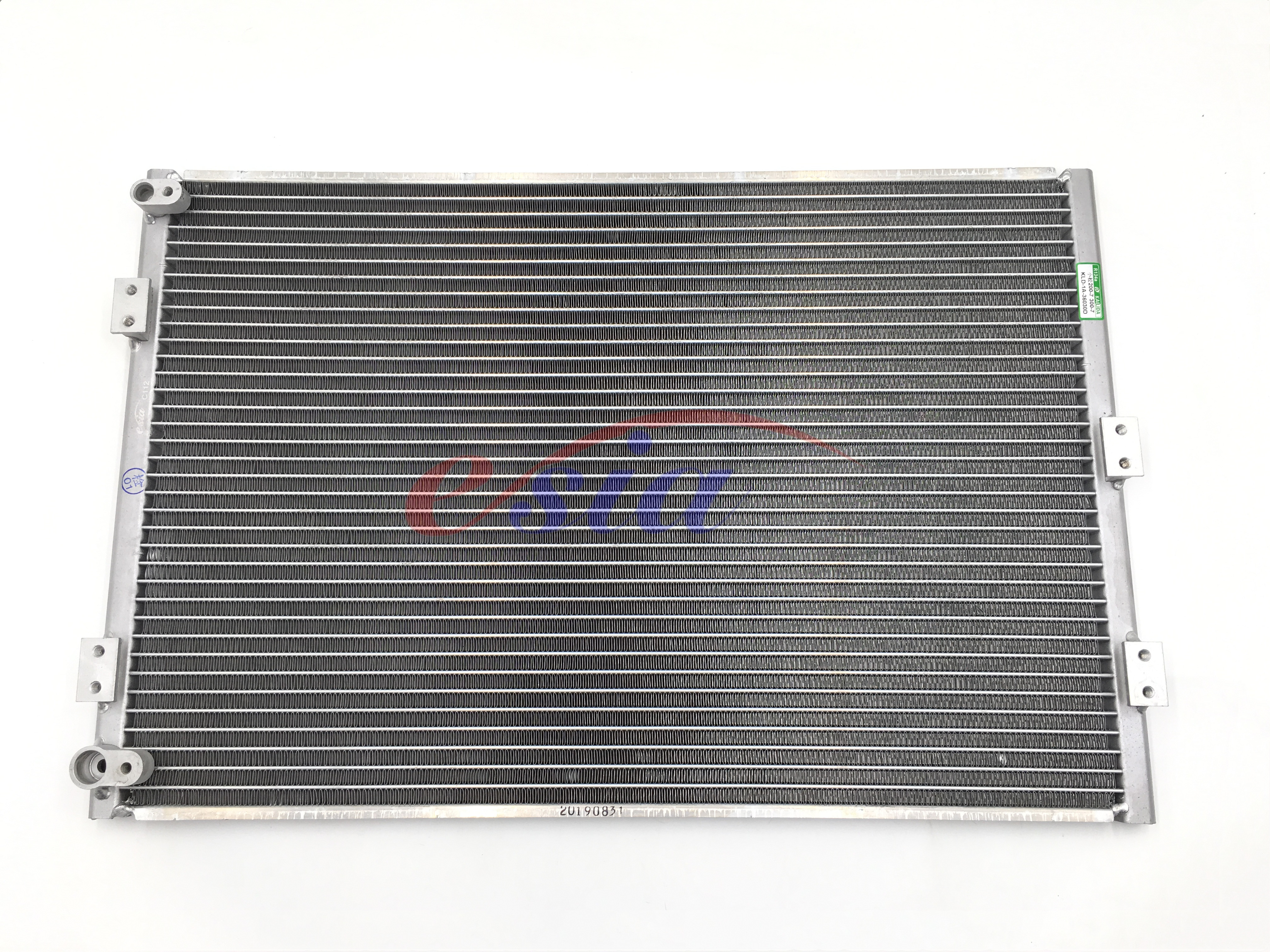
Replacing a CAT 320D AC condenser demands precise technical specifications and strict adherence to factory geometry. Fitment precision ranks as the top priority during installation. The replacement unit must align exactly with factory mounting holes. Refrigerant line routing must match the original schematics perfectly. Misalignment creates a severe mechanical problem. It forces physical tension on O-ring seals and aluminum connection blocks. This constant tension leads to rapid freon leaks as the machine vibrates on the job site.
Core thickness and Fin Density (FPI) require careful analysis. You must analyze the trade-off between heat dissipation and debris clogging. Standard highway vehicles use a high Fin-Per-Inch (FPI) count to maximize cooling capacity. However, too high an FPI count traps dust quickly in mining or trenching applications. Heavy-duty applications require a lower, optimized FPI count to allow for efficient debris clearance. Require parallel flow micro-extruded tubes for your replacements. They offer optimal heat transfer without compromising structural integrity under heavy loads.
Corrosion resistance represents another mandatory technical specification. Job sites routinely expose machines to moisture, acidic soil, and harsh chemical treatments. We highly recommend specifying units with anti-corrosive coatings. High-grade aluminum alloys also combat environmental degradation effectively. Regular pressure washing removes surface dirt but accelerates rust on unprotected bare metal. Advanced protective coatings extend component life significantly, keeping the cabin comfortable season after season.
Komatsu -7 machines, including popular models like the PC200-7 and PC300-7, present unique system integration challenges. These machines feature specific spatial constraints within the engine bay. They utilize highly engineered airflow dynamics to cool multiple heat exchangers simultaneously. You cannot disrupt this carefully planned ventilation path. An improperly sized component restricts fan pull, causing a cascading failure of overall engine cooling systems.
Pressure thresholds matter immensely in these machines. Summer operations generate extreme heat and demand maximum cooling loads. The HVAC system pushes peak operating pressures during these high-load scenarios. You must source parts tested far beyond standard operating limits. Demand components pressure-tested to exceed the maximum thresholds of heavy-duty HVAC systems. Standard automotive pressure tests simply do not suffice for a 20-ton excavator working in direct sunlight.
Cross-compatibility risks pose a major threat to reliability. We strongly warn against utilizing cheap "universal fit" options. Universal units almost always require custom bracket modification or cutting. Modifying brackets alters the manufacturer’s engineered vibration damping characteristics. A rigid, altered mount transfers raw engine and hydraulic vibration directly into the fragile aluminum core. This structural compromise guarantees a premature failure.
Procurement teams constantly balance upfront parts acquisition against operational risks. OEM units carry a premium price tag for guaranteed fitment and peace of mind. High-tier aftermarket units offer substantial cost savings. However, securing these savings requires stricter technical vetting. You must evaluate internal manufacturing standards to separate reliable units from cheap imitations.
Brazing quality dictates the physical strength of the heat exchanger. Look specifically for Nocolok brazing processes. This controlled atmosphere brazing method remains the absolute industry standard for durable aluminum heat exchangers. It creates strong, seamless joints resistant to vibration cracking.
Leak testing procedures separate premium builders from low-quality suppliers. Demand verifiable proof of factory pressure testing. Helium leak detection at 300+ PSI ensures true integrity. Helium molecules easily escape through microscopic pinholes that standard air tests miss entirely.
Avoid red flags during your supplier evaluation. Reject vendors unwilling to disclose exact material thickness. Skip sellers who hide the final component weight, as unusually light units indicate thin, weak aluminum. Avoid suppliers using generic stock photos without listing exact OEM crossover part numbers.
Evaluation Criteria | Standard Automotive Grade | Heavy-Duty Aftermarket / OEM |
|---|---|---|
Brazing Method | Standard atmospheric brazing | Nocolok controlled atmosphere brazing |
Leak Testing | Air pressure testing (Low PSI) | Helium detection (300+ PSI) |
Tube Construction | Standard round tube and fin | Parallel flow micro-extruded tubes |
Mounting Brackets | Thin stamped steel or aluminum | Reinforced, heavy-gauge aluminum |
Fin Spacing (FPI) | High density (Prone to rapid clogging) | Optimized low density (Easy debris clearing) |
Even the highest quality component fails if mechanics ignore proper installation disciplines. The contamination threat remains the leading cause of repeat failures. Did the previous compressor suffer internal fragmentation? If so, sharp metal shavings now contaminate the entire refrigerant line system. Installing a new heat exchanger without performing a deep system flush guarantees a repeat failure. These microscopic shavings act like sandpaper inside the system. They circulate rapidly and puncture new micro-tubes from the inside out.
Mandatory concurrent replacements protect your machinery investment. You must replace specific supporting parts together. Emphasize the absolute necessity of replacing the receiver drier or accumulator. Swap the expansion valve simultaneously whenever the main core is replaced. The receiver drier acts as a filter and moisture absorber. Once a system opens, the internal desiccant saturates instantly. Skipping this replacement step voids most manufacturer warranties and degrades overall system health.
Mechanics must pay close attention to O-rings and lubrication. Specify the exclusive use of exact-spec, heavy-duty O-rings. Mechanics must coat these O-rings in the correct PAG oil before tightening fittings. Dry O-rings twist, pinch, and tear during assembly. Proper lubrication ensures a verifiable, lasting seal that handles heavy machine vibration.
Recover all existing refrigerant using EPA-certified recovery machinery.
Flush all physical lines and hoses thoroughly using an approved, residue-free solvent.
Replace the receiver drier and expansion valve to ensure system purity.
Install the new component using freshly lubricated O-rings at all connection points.
Pull a deep vacuum for at least 45 minutes to boil off any residual moisture.
Recharge the system using the exact factory weight specifications for refrigerant.
Procurement involves more than just selecting a part number. You must evaluate the supplier's logistical capabilities. Packaging serves as a crucial quality indicator. Aluminum cooling fins are highly susceptible to crush damage during heavy freight transit. Poorly packed boxes arrive ruined. Require suppliers who use reinforced, drop-tested packaging. Foam inserts and rigid edge protectors prevent transit damage. If a supplier cuts corners on cardboard, they likely cut corners on aluminum construction.
Warranty transparency separates reliable partners from fly-by-night operations. Evaluate warranties based on harsh implementation realities. What specific actions void the warranty? Many vendors deny claims citing a lack of proof of a system flush. Read the fine print carefully. Transparent suppliers outline exact requirements upfront. Reading the about us page of a potential supplier often reveals their true commitment to quality control and long-term customer support.
Finally, assess inventory availability and lead times. In the heavy machinery sector, immediate availability often outweighs minor price differences. The daily cost of machine downtime far exceeds the savings of a cheaper part that takes two weeks to arrive. Ask suppliers about actual warehouse stock levels. Fast shipping ensures your fleet gets back to moving earth quickly.
Sourcing an excavator cooling component is never a simple commodity purchase. It remains a critical operational decision that impacts operator safety and project deadlines. Success requires prioritizing structural durability over initial price tags. You must demand precise fitment and verify strict factory pressure testing. Heavy equipment simply demands heavy-duty engineering.
Advise your procurement buyers to cross-reference their exact machine serial numbers with OEM part numbers carefully. Request specific construction data, such as brazing methods and FPI counts, from aftermarket vendors before buying. Finally, ensure your maintenance teams are fully prepared for strict installation protocols. Protect your heavy equipment through diligent vetting and uncompromising maintenance standards.
A: Routine maintenance requires daily or weekly blow-outs with compressed air. Use low pressure. Always blow air from the back side forward to push debris out. Avoid high-pressure washers. The intense water stream easily bends fragile fins, which blocks airflow and ruins cooling efficiency.
A: Early leaks usually point to installation tension from misaligned brackets. Missing vibration dampeners also cause rapid failure. Additionally, failing to flush old debris leaves metal shavings in the system. These shavings circulate and quickly puncture the new micro-tubes from the inside out.
A: Rarely. Micro-tube parallel flow condensers are nearly impossible to flush completely once contaminated. They are also difficult to TIG weld reliably due to extremely thin material gauges. Replacement is the standard industrial recommendation to avoid recurring breakdowns and extended machine downtime.


