

close
Choose Your Site
Global
Social Media


Views: 0 Author: Site Editor Publish Time: 2026-06-18 Origin: Site


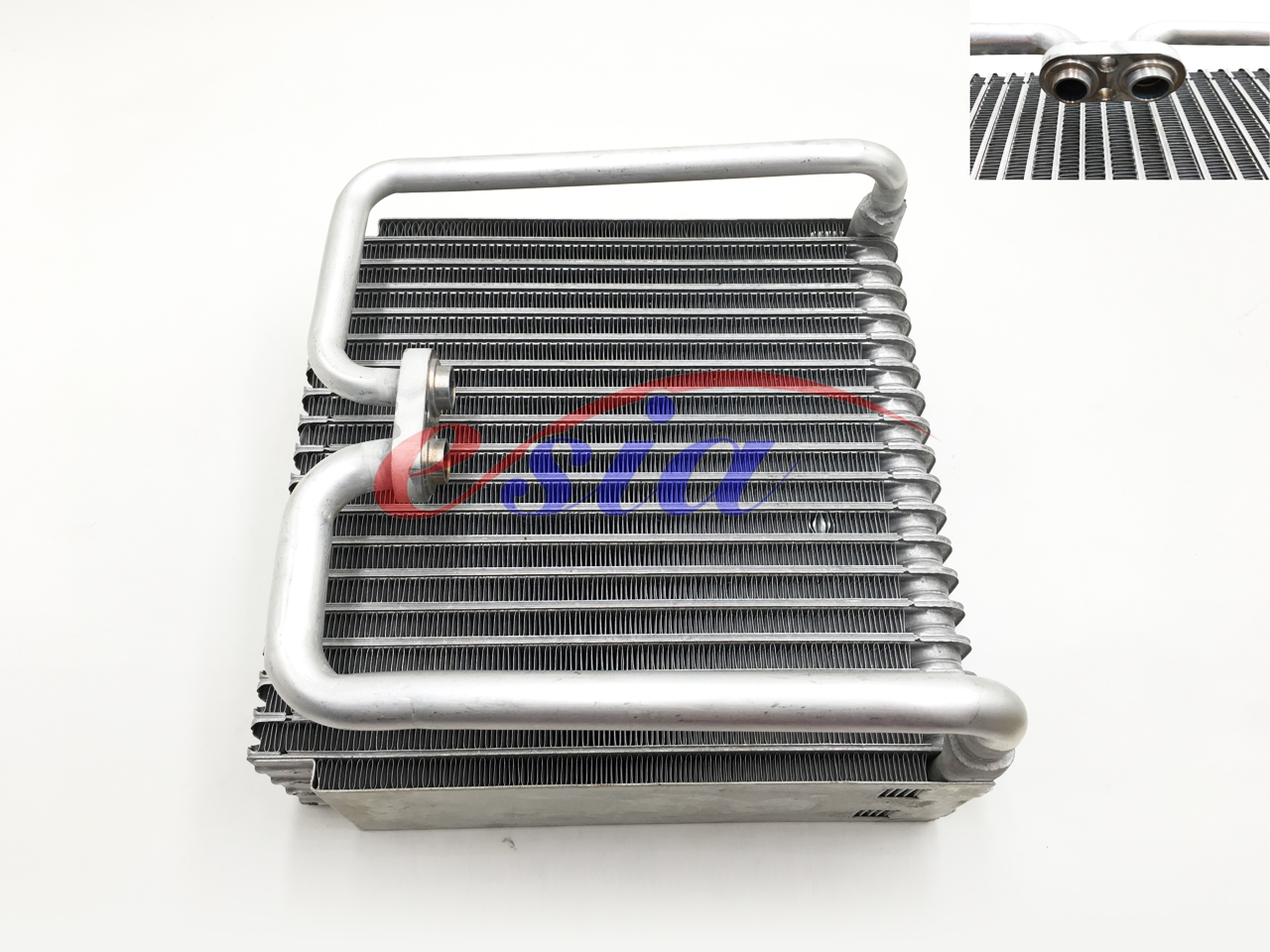
The air conditioning in your vehicle is more than a convenience; it's a critical system for driver comfort and safety. When it fails, you often suspect a simple refrigerant leak. However, the problem could be the system's most inaccessible component: the evaporator core. Buried deep within the dashboard, this part is central to the cooling process. Its location turns what should be a straightforward part swap into one of the most dreaded and labor-intensive repairs in the automotive world. The financial reality is stark: the cost of the part itself is often a fraction of the total bill. The majority of the expense comes from the extensive labor required to dismantle and reassemble the vehicle's interior.
This guide provides a technical framework for vehicle owners and fleet managers facing this costly repair. We will explore how to diagnose failures accurately, select a high-quality replacement, and understand the total cost of ownership. By understanding the complexities involved, you can mitigate the risk of repeat labor and ensure your investment restores your vehicle's cooling system to factory specifications for years to come.
Labor-to-Part Ratio: Replacement labor often exceeds the part cost by 5x–10x; choosing a sub-par core is a high-risk financial gamble.
Diagnostic Accuracy: Why "low refrigerant" is often misdiagnosed, and the necessity of electronic leak detection before committing to a dash-pull.
Material Quality: The shift from copper to aluminum and the importance of anti-corrosion coatings in modern Auto AC Parts.
Total Cost of Ownership (TCO): Why "while-you-are-in-there" repairs (heater cores, blend door actuators) are essential for long-term ROI.
Unlike a condenser or compressor that is accessible from the engine bay, the evaporator core is hidden inside the HVAC (Heating, Ventilation, and Air Conditioning) plenum case. This case is tucked away deep behind the dashboard. Replacing it isn't a matter of unbolting a few components; it requires a near-total disassembly of the vehicle's interior.
The process, known in the industry as a "dash-pull," is as intensive as it sounds. A technician must systematically remove the glove box, center console, radio, instrument cluster, steering column, and sometimes even the front seats. Only then can they unbolt and carefully maneuver the entire dashboard assembly out of the vehicle. This process alone can take 6 to 12 hours, depending on the vehicle's complexity. Once the dash is out, the HVAC case must be removed and split open to finally access the faulty evaporator core. The reassembly is just as meticulous, with a high risk of creating new problems if not done perfectly.
For commercial buyers or fleet managers, the invoice for the part is a secondary concern. The primary cost driver is downtime. A delivery van, service truck, or executive vehicle that is out of commission for two or three days represents a significant loss of revenue and productivity. The longer the vehicle is in the shop, the greater the financial impact. This makes a swift, correct, and reliable repair the top priority. A failed replacement that requires the vehicle to return to the shop is not just an inconvenience; it's a direct blow to the bottom line.
A successful replacement is not merely about restoring cold air. The true measure of success is a "one-and-done" event. This means the repair restores the AC system to its original performance levels without introducing new issues. Common post-repair problems include dashboard rattles from improperly secured trim, electrical gremlins from disturbed wiring harnesses, or poor airflow from misaligned ductwork. A quality repair leaves no trace, returning the vehicle to the owner in the same condition it was in before, but with a perfectly functioning climate control system.
The most expensive repair is the one you didn't need. Before committing to a dash-pull, it is absolutely essential to confirm that the evaporator core is the true source of the AC failure. Its hidden location makes diagnosis tricky, and misdiagnosis can lead to thousands of dollars wasted on unnecessary labor. A simple assumption of "low refrigerant" is not a sufficient diagnosis.
Evaporator leaks are notoriously difficult to pinpoint. A leak in a condenser at the front of the car or a visible AC hose will often leave oily residue or be easily detected. An evaporator leak, however, occurs inside the sealed HVAC box. The leaking refrigerant gas and trace amounts of oil are typically blown out of the AC drain tube with condensation, leaving little to no evidence under the hood. This makes it a "ghost leak" that requires specialized detection methods to confirm.
Standard leak detection methods often fall short when diagnosing an evaporator. Technicians must employ more advanced techniques to be certain.
UV Dye Limitations: Injecting UV dye into the AC system is a common first step. However, if the leak is in the evaporator, the dye will be contained within the dark, inaccessible HVAC box. A technician cannot see the tell-tale glow without disassembling the dash, defeating the purpose of pre-repair diagnosis. Sometimes, trace amounts may exit the drain tube, but this is not always a reliable indicator.
Electronic "Sniffers": The most effective tool for this job is a sensitive electronic refrigerant leak detector, often called a "sniffer." A technician will turn the vehicle's blower fan on high and insert the probe of the detector into the center vents. If refrigerant is leaking from the evaporator, the gas will be picked up by the detector as it flows through the ductwork. Confirming this by placing the sniffer at the AC condensation drain tube exit under the car provides a very high degree of confidence in the diagnosis.
System Isolation and Pressure Testing: For absolute certainty, a technician can isolate the evaporator core from the rest of the AC system. This involves disconnecting the inlet and outlet lines at the firewall and capping the rest of the system. They can then pressurize only the evaporator with dry nitrogen and monitor it with a sensitive gauge. If the pressure drops over time, it provides undeniable proof of a leak within the core itself.
A lack of cooling is not always caused by a leak. A clogged or failing expansion valve (or orifice tube) can mimic the symptoms of a faulty evaporator. This small valve, located right before the evaporator, can get stuck and prevent the proper flow of refrigerant. This results in poor cooling performance but does not require a full dash-pull to replace. Differentiating between these two failures requires a technician to analyze system pressures carefully. Rushing to judgment can lead to a costly and unnecessary evaporator replacement when a much simpler fix was all that was needed.
Once you have confirmed the evaporator core is faulty, the focus shifts to selecting a quality replacement. Given the immense labor involved, choosing a cheap, low-quality part is a massive financial risk. The part itself must be engineered to last. Understanding the materials, design, and manufacturing standards is key to making an informed decision.
Modern evaporators have transitioned from heavier copper/brass construction to lightweight aluminum. While this change benefits fuel economy and thermal efficiency, it introduces a vulnerability to a specific type of failure known as "formicary corrosion." This occurs when moisture combines with airborne pollutants inside the cabin (from cleaning agents, plastics, or even human breath), creating a weak formic acid. Over time, this acid creates microscopic, ant-tunnel-like pits in the aluminum tubing, eventually leading to refrigerant leaks. A reputable Evaporator Core manufacturer will use high-grade, corrosion-resistant aluminum alloys and apply protective coatings to mitigate this risk.
Not all evaporators are created equal. The design and manufacturing process directly impact performance and longevity.
The internal structure of the core determines how effectively it transfers heat. Understanding the two primary designs helps in evaluating quality.
| Design Type | Description | Advantages | Disadvantages |
|---|---|---|---|
| Plate-and-Fin | Consists of stacked plates that form refrigerant channels, with fins brazed between them. Common in modern OEM applications. | Higher thermal efficiency, more compact design, and greater structural rigidity. | More susceptible to internal clogging from system debris. |
| Tube-and-Fin | A more traditional design where a continuous tube snakes back and forth through a series of cooling fins. | More resistant to clogging and generally less expensive to manufacture. | Less efficient heat transfer and can be more prone to vibration-related failures. |
Surface coatings play a vital role. A hydrophilic coating helps water condensate run off the fins more easily, preventing moisture buildup that can lead to mold and mildew growth. This is the primary defense against the foul, musty odor often called "dirty sock syndrome." Some premium cores also feature anti-microbial coatings that actively inhibit the growth of bacteria and fungi, ensuring the air you breathe is clean.
When selecting a brand, look for signs of quality control and precision engineering. Check if the manufacturer adheres to international standards like ISO 9001, which signifies a commitment to quality management systems. Inquire about their leak-testing protocols. Do they use a simple vacuum test, or do they pressure-test each unit with helium or nitrogen in a water bath, which is a more rigorous method for finding microscopic leaks? Finally, fitment is critical. A quality part will be an exact replica of the OEM unit, ensuring all mounting points, pipe connections, and seals line up perfectly.
An evaporator core replacement is a major investment, often totaling $1,500 to $3,000 or more. For older, high-mileage vehicles, this cost can approach or exceed the car's market value. This forces a difficult decision: is the repair economically viable, or is it time to consider replacing the vehicle? A logical decision matrix can help guide this choice.
The primary consideration is the vehicle's residual value. If a car is worth $4,000 and the repair estimate is $2,500, you are investing over 60% of the vehicle's value into a single repair. You must ask if the car is otherwise in excellent mechanical condition. If it also needs tires, brakes, or has other pending issues, the cumulative cost makes the repair illogical. Conversely, if the vehicle is well-maintained and has significant life left, the investment can be justified to keep it safely on the road.
Here is a simplified chart to help visualize the decision:
| Vehicle Age & Condition | System Condition | Recommendation |
|---|---|---|
| Low mileage, good condition | Isolated evaporator leak | Proceed with Replacement. The investment is sound. |
| High mileage, fair condition | Evaporator leak + aging compressor | Evaluate Total Cost. A full system overhaul might be needed. Weigh against vehicle value. |
| High mileage, poor condition | Catastrophic compressor failure ("black death") | Consider Replacing Vehicle. The repair cost is likely to exceed the vehicle's value. |
Sometimes, the evaporator fails as a result of a larger system problem. A catastrophic compressor failure, often called "black death," sends a wave of metallic debris and contaminated oil throughout the entire AC system. This shrapnel can clog the tiny passages inside the evaporator core. In such cases, the core may be contaminated beyond the point where it can be effectively flushed. Attempting to install a new compressor without replacing the clogged evaporator will lead to immediate failure of the new compressor. This scenario requires a full system replacement, making the repair decision even more critical.
There are situations where it makes financial sense to replace a perfectly functional evaporator core. If the dashboard is already being removed for another major repair—such as a leaking heater core, a blend door actuator failure, or an airbag recall—the "while you are in there" logic comes into play. The labor to access the HVAC box has already been spent. Adding a new evaporator to the job might only add a small amount to the total bill, far less than the cost of a future standalone replacement. For an aging vehicle, this proactive maintenance can prevent a massive repair bill down the road, maximizing the Total Cost of Ownership (TCO).
Choosing the right part and making the decision to proceed is only half the battle. The quality of the installation is just as critical as the quality of the part itself. A rushed or inexperienced installation can undermine the entire investment, leading to repeat failures and new problems.
The single biggest risk is a "comeback," where the vehicle must return for the same issue. This is frequently caused by installing budget-tier aftermarket cores. These parts may have poor quality welds that fail under pressure, or they may have slight dimensional inaccuracies that stress the connections, causing leaks to develop weeks or months after the repair. Analysis of repair shop data consistently shows that the failure rate for the cheapest Evaporator Core is significantly higher than for OEM or premium aftermarket brands. Saving a small amount on the part itself is a foolish gamble when weighed against the massive cost of repeating 10+ hours of labor.
Professional AC service adheres to a strict rule: whenever the sealed refrigerant system is opened for a major component replacement, certain ancillary parts must also be replaced. This is non-negotiable for protecting the new core and the entire system.
Receiver Drier or Accumulator: This component contains a desiccant material that absorbs moisture from the refrigerant. Once exposed to atmospheric air during the repair, the desiccant becomes saturated and useless. Failing to replace it will leave moisture in the system, which can lead to corrosion and a destructive acid formation.
Expansion Valve or Orifice Tube: This is the metering device that controls refrigerant flow into the evaporator. It has fine internal passages and screens that can easily become clogged with any debris loosened during the repair. Replacing it is cheap insurance against a blockage that would starve the new core and cause poor performance.
Beyond the part itself, the technician's attention to detail during reassembly is paramount. The HVAC case is sealed with foam gaskets and insulation. These materials are often brittle with age and can crumble during disassembly. If they are not properly replaced, it allows air to bypass the evaporator core. Instead of being forced through the cooling fins, air can sneak around the sides. This air bypass can reduce cooling efficiency by 20% or more, resulting in weak airflow and lukewarm vent temperatures, even though the new core is functioning perfectly. A meticulous technician will take the time to replace all necessary seals to ensure an airtight fit.
Replacing an evaporator core is one of the most significant and costly repairs a vehicle can undergo. The disproportionate relationship between part cost and labor cost makes it a high-stakes decision where cutting corners is a recipe for financial regret. It is a true "buy once, cry once" component; the initial investment in a quality part and expert installation pays dividends in reliability and peace of mind.
Your most powerful tools in this process are diagnostic certainty and manufacturer reputation. Do not proceed with the repair until you have irrefutable proof that the evaporator is the source of the leak. When selecting a replacement, prioritize a brand with a proven track record of quality materials, precise fitment, and rigorous testing over the lowest price tag. As a final step, empower yourself by asking the service provider to verify the new core's integrity with a pressure test before the dashboard is painstakingly reassembled. This simple request ensures the job is done right the first time, protecting your investment and getting you back on the road with confidence.
A: A high-quality, OEM-spec evaporator core should last the life of the vehicle, typically 10-15 years or well over 150,000 miles. However, factors like high humidity, cabin air pollution, and infrequent use of the AC system can accelerate corrosion and lead to premature failure. Regular use of the AC helps circulate oil and keeps seals lubricated, promoting longevity.
A: It is strongly advised not to use "stop-leak" products for an evaporator leak. These sealants can temporarily plug a small leak but often clog the tiny, precise passages of the expansion valve or orifice tube. This can lead to a complete system blockage, causing even worse performance and potentially damaging the compressor, resulting in a much more expensive repair.
A: A musty or mildew smell from a new core is usually caused by improper drainage. During installation, the AC condensation drain tube may have been kinked, clogged, or disconnected. This causes water to pool in the HVAC box instead of draining under the car, creating a perfect environment for mold and bacteria to grow on the new core's fins.
A: While OEM parts guarantee a perfect fit and material quality, premium aftermarket brands can offer comparable or even superior quality at a better price point. The key is to avoid generic, low-cost "white box" parts. A reputable aftermarket manufacturer that meets ISO certification standards and has a strong warranty is a viable and often more economical choice than the dealer part.
A: The labor time can vary significantly by vehicle model. For most standard sedans and trucks, shops will quote between 8 and 12 hours. For more complex luxury vehicles or certain trucks with intricate dashboards, the job can take 15 hours or more. Always ask for a detailed quote based on the industry-standard labor guide for your specific vehicle.


