

close
Choose Your Site
Global
Social Media


Views: 0 Author: Site Editor Publish Time: 2026-10-04 Origin: Site


For commercial fleet operators and diesel mechanics, cabin cooling failures in the Hyundai HD series directly impact driver safety, compliance, and productivity. Maintaining optimal cabin temperatures ensures your drivers remain alert during demanding long-haul routes. These unexpected cooling failures rapidly erode route efficiency and operational morale.
Because the HD45, HD65, HD72, and HD78 share similar cab structures, aftermarket suppliers often incorrectly list their AC condensers as universally compatible. This dangerous generalization completely ignores critical internal flow capacity and mounting bracket differences. Attempting to install a mismatched component wastes valuable shop time and mechanic resources.
Ordering the wrong part leads to installation delays, compromised cooling efficiency, or premature structural failure due to continuous commercial vibration. This guide breaks down the exact fitment differences, rigorous evaluation criteria, and smart procurement logic for Hyundai HD-series AC condensers. You will learn exactly how to match the right thermal specifications to your specific engine and payload requirements.
Cab Similarities vs. Mechanical Differences: While the exterior footprint of the condenser is similar across the HD range, internal flow capacity, mounting brackets, and pipe fittings vary based on engine displacement and GVW.
Cooling Capacity Scales with Truck Size: A Hyundai HD78 AC condenser often features higher fin density to compensate for larger engine heat loads compared to the lighter HD45.
Material Durability is Non-Negotiable: Commercial truck condensers require heavy-duty, brazed-aluminum construction to withstand continuous diesel engine vibration.
System Integrity: Replacing the condenser always requires replacing the receiver drier and flushing the system to prevent repeat compressor failure.
Fleet managers face severe financial penalties when sourcing the wrong HVAC components. The hidden costs of incorrect aftermarket cross-referencing extend far beyond the initial purchase price. When a commercial truck sits idle in a repair bay waiting for replacement parts, it generates zero revenue. Extended vehicle downtime disrupts delivery schedules, frustrates loyal clients, and forces dispatchers to scramble for backup vehicles.
Furthermore, mechanics waste valuable labor hours attempting to modify incorrect parts. Return shipping costs for bulky items like cooling modules drain maintenance budgets rapidly. Repeat labor destroys shop profitability and lowers mechanic morale. Fleet operators must prioritize getting the repair right the first time to maintain operational efficiency.
Many generic parts catalogs treat commercial trucks like passenger cars. They mistakenly assume identical exterior cab dimensions mean identical internal systems. Trusting these generic catalogs presents a massive risk. While the physical dimensions of the core footprint may align perfectly, the critical mounting depth often differs by several millimeters. Thread pitches on pipe fittings frequently vary across different engine models.
This "universal fit" myth leads mechanics down a frustrating path. You might successfully bolt the unit to the radiator support, only to discover the high-pressure lines cannot connect. Forcing these connections strips the delicate aluminum threads, ruining the new part instantly.
A successful, long-lasting repair requires exact precision. Fleet mechanics must evaluate replacements against strict success criteria:
Exact OEM Part Number Matching: Cross-reference the 17-digit VIN against the manufacturer’s database.
Verifiable Cooling Capacity: Ensure the replacement part delivers the exact British Thermal Units (BTUs) required by your specific engine displacement.
True Drop-In Fitment: The new unit must install flawlessly without requiring bracket modifications, bending of hard lines, or custom fabrication.
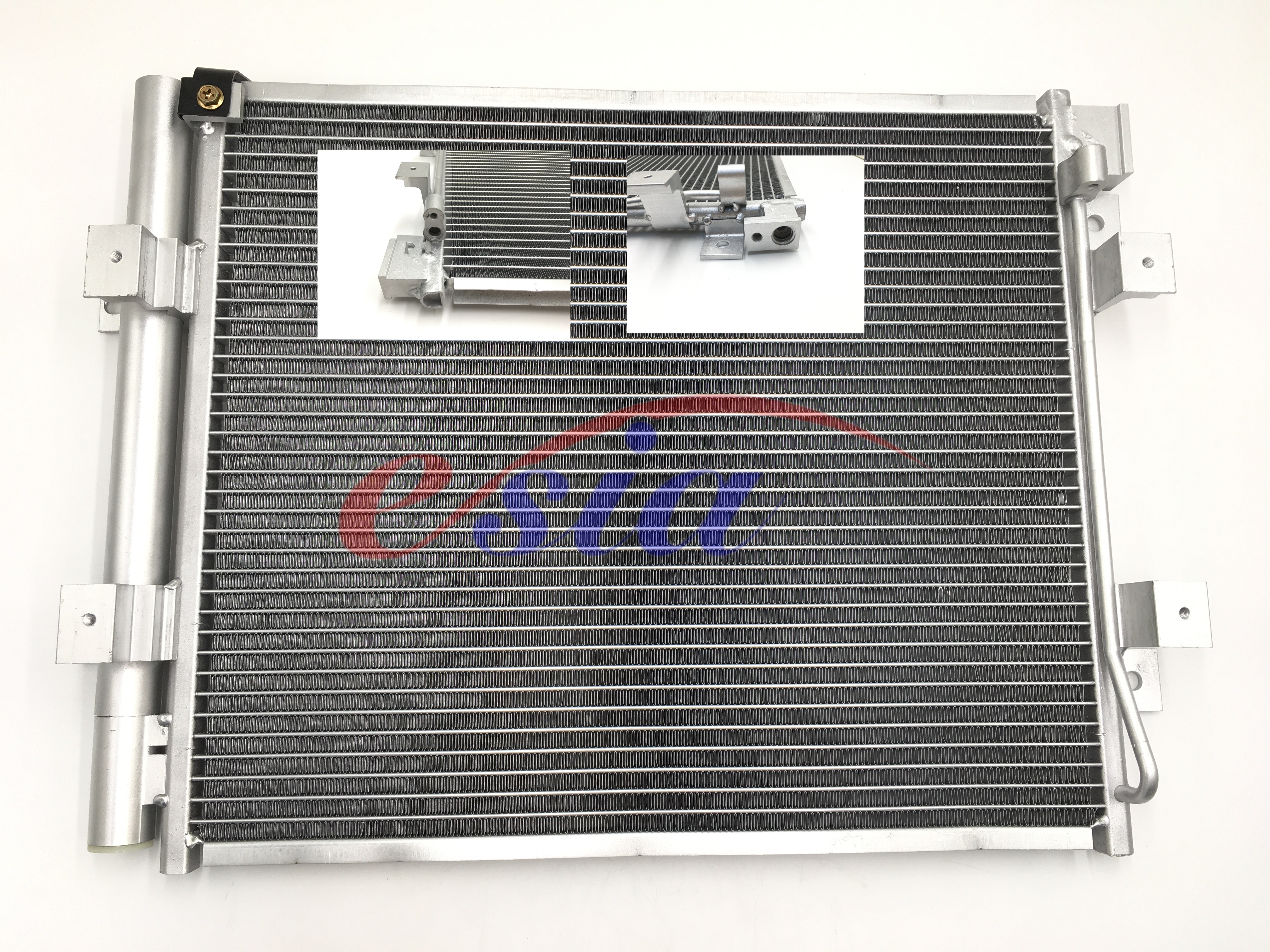
Understanding the Hyundai "Mighty" cab design lineage helps explain the confusion surrounding HVAC compatibility. The baseline shared dimensions of the frontal cooling module look remarkably similar across the entire series. The external frame width and height remain relatively constant to fit behind the standard front grille. However, the internal architecture changes drastically based on the truck's Gross Vehicle Weight (GVW) and intended application.
The HD45 and HD65 represent the lighter-duty variations in the lineup. Fleet operators primarily deploy these trucks for urban delivery routes, city logistics, and light regional hauling. They typically utilize smaller displacement engines. Their thermal load remains manageable during stop-and-go city traffic.
These specific models require a standard fin density. Standard tube spacing provides adequate cooling for these applications without over-engineering the part. A lightweight design suffices because these trucks rarely face extreme, sustained highway loads under maximum payload.
Moving up the weight class introduces new thermal challenges. The transition to medium-duty hauling changes the mechanical requirements entirely. Drivers push these trucks harder over longer regional routes, carrying significantly heavier cargo.
A Hyundai HD72 AC condenser features specific bracket locations designed to handle increased frame flex. The pipe connector sizes often increase to accommodate the higher refrigerant flow rates necessary for rapid cab cooling. You cannot safely install a light-duty HD45 unit in this application. Doing so starves the compressor of proper refrigerant flow and leaves the cabin sweltering during summer routes.
At the top of this series sits the HD78, built for serious commercial hauling. The higher payload capacity and larger engine variants, such as the D4DD or D4GA blocks, generate immense ambient engine bay temperatures. The cooling system must fight against both the external weather and the massive heat radiating from the diesel block.
To combat this, a Hyundai HD78 AC condenser requires a thicker core structure. Premium units utilize an advanced micro-channel design for optimal heat dissipation. This enhanced thermal capacity ensures the air conditioning system blows ice-cold air even when the truck hauls maximum tonnage up steep grades.
Vehicle Model | Typical Fleet Application | Engine Heat Load | Required Condenser Characteristics |
|---|---|---|---|
Hyundai HD45 | Urban delivery, light logistics | Low to Moderate | Standard fin density, basic tube-and-fin design |
Hyundai HD65 | City routes, mixed cargo | Moderate | Standard fin density, standard pipe fittings |
Hyundai HD72 | Regional hauling, medium-duty | High | Enlarged pipe connectors, reinforced bracket mounts |
Hyundai HD78 | Heavy payload, steep grade hauling | Severe | Micro-channel core, maximum fin density, heavy-duty brackets |
Fleet procurement specialists constantly weigh the benefits of genuine OEM components against tier-one aftermarket alternatives. Making the right choice requires evaluating replacement parts across three distinct dimensions: material quality, vibration resistance, and the overall cost-to-outcome ratio.
The manufacturing process determines how long a cooling module will survive in the real world. Traditional tube-and-fin designs offer basic functionality, but they often fall short in heavy commercial applications. Modern brazed aluminum micro-channel designs provide superior thermal transfer. They cool the refrigerant faster and weigh significantly less.
Furthermore, fleet vehicles face harsh environmental conditions daily. Trucks operating in coastal environments or regions utilizing heavy winter road salts suffer from accelerated corrosion. Bare aluminum oxidizes quickly under these conditions. You must prioritize components featuring factory-applied anti-corrosive coatings. These protective layers prevent pitting and extend the operational life of the unit.
Commercial diesel engines produce intense, high-amplitude vibrations. These vibrations transfer directly through the chassis into the radiator support structure. Cheap aftermarket parts crack under this continuous stress. The weakest points usually exist at the welding seams and mounting tabs.
When evaluating premium aftermarket parts, inspect the structural reinforcements. High-quality replacements use heavy-duty mounting tabs and thicker side channels. These enhancements prevent stress fractures and stop destructive vibration harmonics from tearing the core apart.
Analyzing the upfront cost of genuine Hyundai OEM parts versus tier-one aftermarket alternatives reveals important budgeting strategies. Genuine OEM components guarantee exact fitment and factory-level performance, but they carry premium price tags. Strict OEM adherence makes perfect sense for newer trucks still operating under comprehensive warranties.
However, aging fleets often require a different approach. Investing heavily in OEM parts for a ten-year-old truck rarely provides a sensible financial return. In these scenarios, a high-quality, tier-one aftermarket choice proves highly effective. You balance a lower initial purchase price against dependable longevity, keeping older assets profitable.
Replacing a commercial HVAC component involves far more than simply swapping a part. Improper installation techniques destroy new parts within days. Mechanics must understand the hidden implementation risks before opening the system.
Compressor failure represents the most common reason for system overhauls. When a compressor self-destructs, it sends tiny metal shards rocketing through the high-pressure lines. This debris eventually lodges deep inside the tiny passageways of the cooling module.
Many mechanics mistakenly believe they can simply flush the old unit and install a new compressor. This practice guarantees a repeat failure. Modern micro-channel designs cannot be effectively flushed. Solvents lack the pressure required to force sharp metal shards out of microscopic tubes. If the original compressor failed internally, you must replace the entire condenser assembly. Leaving debris in the lines will destroy your expensive new compressor immediately.
You cannot cut corners during a major rebuild. Replacing your primary cooling module requires swapping complementary system parts simultaneously. You must install a new receiver drier or accumulator during the repair. This critical step ensures warranty validity for most component manufacturers.
The receiver drier serves a vital function. It filters out fine contaminants and removes harmful moisture from the system. Moisture mixed with R134a refrigerant creates highly corrosive hydrofluoric acid. This acid eats through aluminum components from the inside out. Installing a fresh receiver drier guarantees a clean, dry operating environment.
The fluid volume requirements change significantly across the HD45 through HD78 spectrum. Mechanics must consult official service manuals to verify capacities. You face severe risks if you guess these volumes.
PAG Oil Considerations: Different compressors demand specific viscosities and volumes of PAG oil. Undercharging the oil starves the compressor of vital lubrication, leading to rapid friction failure.
R134a Refrigerant Limits: Overcharging the refrigerant creates dangerous high-pressure scenarios. It causes the compressor to lock up or blow safety relief valves. Undercharging results in continuous compressor cycling and poor cabin cooling.
Finding a reliable parts supplier separates profitable fleets from struggling operations. You need partners who understand the technical nuances of heavy-duty truck HVAC systems. Follow this systematic shortlisting logic to secure the best components.
Never order replacement parts based solely on the truck’s model year or a visual guess. Mid-year production changes frequently alter bracket designs and pipe thread pitches. Always cross-reference the exact OEM part number. Locate the factory sticker on the original frame. These numbers typically follow a specific Hyundai format, such as 97706-XXXXX. Providing this exact sequence to your supplier eliminates fitment guesswork.
Carefully evaluate the supplier's warranty documentation before purchasing. Commercial trucks experience brutal operating conditions, so standard consumer warranties offer little protection. Look for suppliers offering a minimum of 12 months commercial use warranty. Ensure their policy specifically covers common manufacturing defects, such as pressurized weld leaks or core tube failures.
Prioritize distributors who operate with total transparency. Avoid vendors who only display generic stock photos without listing technical specifications. You need detailed spec sheets covering core dimensions, thread sizes, and material construction. To ensure high-quality sourcing, partner your shop alongside specialized commercial truck part distributors who understand heavy-duty HVAC thermal demands. True experts willingly share technical knowledge to help your fleet succeed.
Take immediate action to resolve your current cooling failures safely. First, consult your lead fleet mechanic to review current system pressure readings and diagnose the root cause. Next, extract the exact OEM part number directly from the faulty unit. Finally, contact a specialized commercial truck part distributor to request a detailed quote, ensuring you specify your exact engine model and payload category.
Maintaining optimal cabin temperatures in your commercial fleet requires precise technical execution. While the Hyundai HD45 through HD78 share a common lineage and similar exterior cab aesthetics, their HVAC thermal requirements differ dramatically. Mounting specifications, flow capacities, and core thicknesses demand exact part matching to guarantee long-term reliability.
Investing in a high-quality, exactly specified condenser eliminates costly fleet downtime. It protects the wider air conditioning system from catastrophic failure and keeps your drivers comfortable during grueling routes.
Always match the replacement part to your exact VIN and engine code.
Never attempt to reuse a micro-channel unit after a mechanical compressor failure.
Always replace the receiver drier to protect your new system from moisture and acid damage.
Partner with specialized distributors who provide transparent technical specifications.
A: Not universally. While some aftermarket brands consolidate these models, OEM specifications reveal distinct differences. Cooling capacity and pipe fittings change depending on the exact engine code. Installing an HD65 unit in an HD72 often starves the compressor. You must match the specific part number to ensure proper refrigerant flow and optimal cabin cooling.
A: Premature failure stems from three primary issues. First, mechanics often fail to replace the receiver drier during installation. Second, inadequate system flushing leaves old metal debris inside the lines, which rapidly clogs the new unit. Third, purchasing a cheap, light-duty replacement leads to cracked brackets under heavy-duty diesel vibration. Always perform a complete system service.
A: Micro-channel condensers use flat aluminum tubes containing multiple internal partitions. This advanced design significantly improves heat transfer compared to older tube-and-fin models. Modern Hyundai commercial trucks frequently utilize this technology. Many premium aftermarket replacements upgrade older HD series trucks to micro-channel designs. They deliver superior cab cooling and weigh much less than traditional copper units.
A: The safest method involves providing your 17-digit VIN to a trusted commercial parts dealer. They run this number through official Hyundai parts catalogs. Alternatively, you can locate the original part sticker directly on the factory frame. Never rely solely on the truck’s manufacturing year, as mid-year production changes frequently alter HVAC specifications.


