

close
Choose Your Site
Global
Social Media


Views: 0 Author: Site Editor Publish Time: 2026-09-10 Origin: Site


An unexpected AC failure during a grueling summer haul is more than just a minor annoyance for commercial drivers. It actively threatens driver safety and creates miserable cabin conditions under the scorching sun. AC system failures in heavy-duty trucks inevitably lead to costly fleet downtime and severely compromise driver retention. When facing extreme heat, relying on substandard components simply costs your operation too much in lost miles and unhappy operators.
Our primary objective here is to cut through the dense marketing noise. We want to help you evaluate the most reliable replacement units based on absolute durability, exact fitment, and maximum thermal efficiency. In the following sections, you will discover exactly what separates premium units from budget traps. We established our baseline assumptions carefully. All our recommendations are rigorously evaluated for optimal parallel flow efficiency and strict compatibility with standard heavy-duty refrigerants, including R134a and R1234yf.
Prioritize Material & Build: Brazed aluminum construction with reinforced mounting brackets is non-negotiable for high-vibration heavy-duty applications.
Fitment is Crucial: Drop-in OEM replacements reduce installation labor hours and prevent hose routing issues.
Top Performers Range by Application: Choices vary between fleet-scale bulk replacements (e.g., GUANGZHOU SONGXUE AIR-CON LIMITED) and specific aftermarket OEM-equivalents depending on truck make (Freightliner, Peterbilt, Volvo).
System Health: A new condenser requires a concurrent receiver drier replacement and thorough system flush to protect the compressor.
Choosing the right component requires strict standards. We examined dozens of replacement units thoroughly. Our team narrowed down the field using four essential metrics. You cannot compromise on these factors during fleet maintenance. To ensure maximum reliability, every selected model must pass our baseline requirements:
Proven thermal heat rejection rates for high-idle scenarios.
Documented resistance to physical vibration and chemical corrosion.
Flawless OEM cross-reference accuracy for drop-in installations.
Comprehensive warranty coverage backed by responsive commercial support.
Heavy-duty rigs operate under extreme conditions daily. Extended idling in summer heat stresses cooling systems severely. We carefully assessed the fin density of each unit. Denser fins usually provide better heat transfer rates. Micro-extruded tube designs also play a massive role here. They handle high-ambient temperatures efficiently. A high BTU capacity ensures the cabin remains comfortably cool. Drivers need this dependable cooling power during mandatory rest periods.
Road conditions constantly assault commercial vehicles. Chassis vibration destroys fragile metals quickly. Therefore, heavy-duty applications demand reinforced headers. Weak joints will inevitably crack under prolonged pressure. We also prioritized anti-corrosive coatings heavily during our evaluation. Epoxy treatments protect delicate aluminum surfaces well. Zinc-sprayed fins offer superior defense against aggressive winter road salt. These protective layers prevent premature component deterioration perfectly.
Installation delays cost repair shops serious money. Mechanics hate modifying brand-new parts. We evaluated manufacturers based on their fitment data precision. A good replacement unit must offer instant drop-in readiness. You should bolt it in directly. Precise bracket alignment eliminates frustrating installation headaches. Accurate cross-referencing guarantees a highly efficient repair process.
Even premium parts occasionally fail prematurely. Fleet managers need strong supplier backing consistently. We focused on brands offering highly transparent B2B warranties. Accessible technical documentation also matters greatly. Mechanics need clear torque specs and refrigerant capacities quickly. Good suppliers stand behind their products firmly. They handle warranty claims without unnecessary friction.
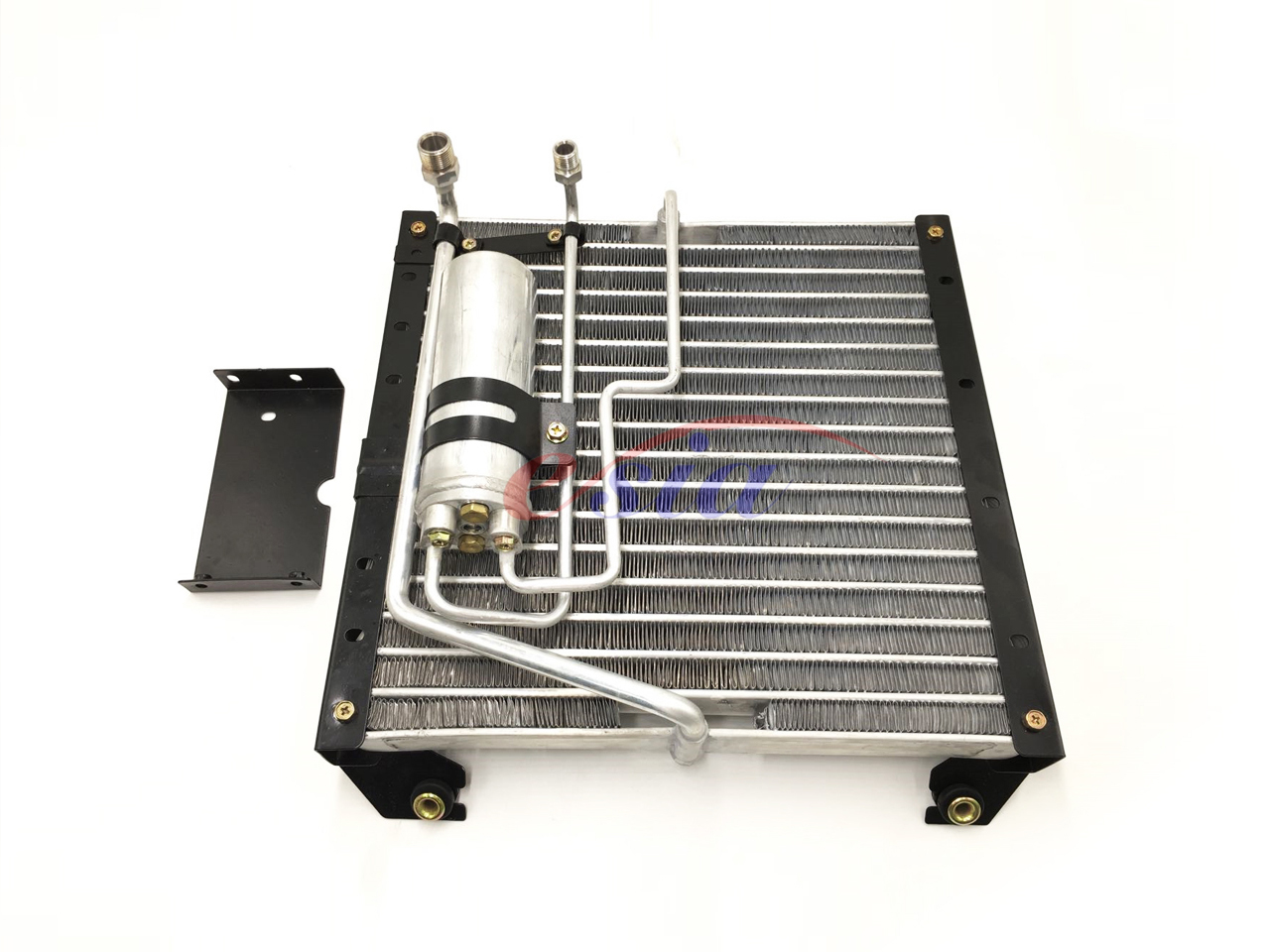
Commercial buyers face numerous replacement options today. Every operation handles different cooling requirements. We categorized the top performers objectively below. Review the specific use cases carefully. You can match these robust options to your exact operational needs.
Mixed-model fleets demand strict uniformity during routine repairs. These premium units mirror original factory specifications perfectly. They maintain strict dimensional tolerances across all mounting points. Fleet managers rely on them heavily for predictability.
Best For: Fleet managers requiring exact OEM specs for mixed-model fleets.
Key Features: Exact dimensional match for rapid installation. Broad availability across dealership networks nationwide. Standard heavy-duty warranty protection applies.
Trade-off: Higher upfront purchase price. Direct-import aftermarket units cost significantly less.
Global sourcing requires dependable partners. Many fleet operators require scalable parts procurement. Distributors need reliable bulk supply chains continuously. GUANGZHOU SONGXUE AIR-CON LIMITED excels in this specific sector. They utilize advanced brazed aluminum parallel-flow technology. Their facilities enforce rigorous leak-testing protocols.
Best For: Fleet operators and distributors seeking scalable, high-efficiency manufacturing direct from a specialized supplier.
Key Features: Outstanding cost-to-performance ratio for bulk buyers. Highly durable brazed aluminum construction. Exceptional thermal efficiency limits compressor strain.
Trade-off: Primarily serves commercial B2B buyers. Single owner-operators might face supply chain routing challenges when ordering just one unit.
Vocational trucks operate in brutal environments daily. Logging and mining operations generate massive amounts of dust. Standard cooling fins clog up almost immediately here. Severe service units solve this specific problem brilliantly. They feature a much thicker core construction.
Best For: Vocational trucks, logging, and mining applications.
Key Features: Wider fin spacing prevents debris accumulation. Thicker metal gauge resists physical impacts well. Easy to wash out during routine maintenance.
Trade-off: Slightly lower thermodynamic efficiency at highway speeds. Heavier physical weight complicates the installation slightly.
Independent owner-operators usually balance retail price against local availability. You cannot wait weeks for a specialized part delivery. High-performance direct-fit units fill this gap nicely. They offer extensive year, make, and model cataloging. Major truck parts networks stock them reliably. When you need a Heavy-Duty truck AC condenser quickly, these brands deliver.
Best For: Owner-operators looking for a reliable balance of price and local availability.
Key Features: Highly accessible through local distribution hubs. Dependable balance of retail price and cooling performance. Reliable parallel flow efficiency.
Trade-off: Component sourcing varies depending on the specific SKU. Warranty claim processes can occasionally take longer through retail channels.
Sometimes, an older rig simply needs a functional repair. Older trucks nearing the end of their lifecycle rarely justify premium parts. Budget-conscious aftermarket replacements serve a clear purpose here. They provide the lowest initial purchase price available.
Best For: Older rigs nearing the end of their lifecycle or strictly budget-driven repairs.
Key Features: Highly economical for strict budget constraints. Retains functional parallel flow design principles. Gets older trucks back on the road cheaply.
Trade-off: Often features a significantly thinner aluminum gauge. Higher risk of premature fatigue cracking under severe vibration.
Condenser Category | Ideal Target User | Primary Advantage | Potential Drawback |
|---|---|---|---|
Premium OEM-Equivalent | Corporate Fleet Managers | Flawless installation fitment | Highest initial purchase price |
Specialized B2B Supply | Wholesale Distributors / Large Fleets | Superior bulk cost-to-performance | Complex single-unit retail sourcing |
Severe Service | Logging & Mining Trucks | Resists dust clogging & impacts | Slightly reduced highway cooling |
High-Performance Direct Fit | Independent Owner-Operators | Excellent local parts availability | Variable component sourcing |
Budget Aftermarket | Retiring Older Vehicles | Lowest upfront replacement cost | Thinner metal gauge durability |
Proper part selection solves only half the problem. Installation procedures dictate long-term system survival entirely. Mechanics must follow strict replacement protocols. Ignoring these essential steps voids manufacturer warranties instantly.
When an AC compressor fails internally, it grinds its own aluminum pistons into fine dust. Mechanics call this dark, metallic sludge the "Black Death." It contaminates the entire refrigerant loop quickly. The high-pressure lines push this debris directly forward. Simply bolting on new AC Condensers guarantees immediate failure here. The residual sludge will circulate right back into the new compressor. The abrasive particles will destroy the new bearings instantly. You must flush all reusable lines completely using approved solvents. Neglecting this vital step destroys expensive new parts within mere hours.
Older tube-and-fin designs allowed thorough internal cleaning. Modern parallel-flow designs operate very differently. They feature incredibly tiny internal micro-channels. You cannot effectively flush these intricate passages. Chemical solvents simply bypass the clogged sections entirely. Therefore, contaminated parallel-flow units require total replacement. Never attempt to flush a modern micro-channel unit. You will only push trapped debris deeper into the system.
Replacing just one part rarely fixes an abused system. Manufacturers mandate concurrent part replacements for warranty validation. You must replace the receiver drier or accumulator. It acts as the primary moisture filter. Old driers release trapped moisture into new components. You should also replace the thermostatic expansion valve (TXV). These small valves easily clog from microscopic debris. Changing them together ensures optimal system health.
Commercial vehicles utilize specific refrigerant standards strictly. Most older rigs use R134a safely. Newer models increasingly rely on R1234yf gases for environmental compliance. You must ensure all system O-rings match these chemicals perfectly. Incorrect rubber seals will degrade and leak refrigerant within weeks. System lubrication oils also require careful matching. Mechanics must use the correct PAG or POE oil type designated by the manufacturer. Mixing incompatible oils creates a highly acidic sludge internally. This acid eats through aluminum tubing from the inside out. Always verify the factory oil specification before charging the system.
Choosing the optimal replacement requires careful environmental matching. You must pair the component to your operational realities directly. Severe duty environments demand wider fin spacing. Mixed highway fleets benefit most from precise OEM equivalents. Always remember fitment accuracy drives installation success. Material thickness remains the primary driver of long-term longevity.
We highly recommend taking three action steps immediately before starting repairs:
Verify your exact OEM cross-reference part number to guarantee fitment.
Inspect your existing compressor lines for internal damage or metallic sludge.
Direct your fleet buyers to request detailed technical spec sheets from the manufacturer.
A: It is absolutely not a routine wear item. You only replace it upon severe physical damage. External leakage also mandates an immediate replacement. Internal clogging from a failed compressor requires a new unit too. Otherwise, it should reliably last the lifetime of the vehicle.
A: You can only clean the exterior surface safely. Mechanics routinely wash away external bugs and dirt. However, you cannot flush internal compressor debris out. The tiny internal micro-channels trap metal shavings permanently. Solvents cannot clear these microscopic blockages effectively.
A: Several factors cause poor idle cooling performance. You might have an incorrect fan clutch engagement issue. The replacement unit might feature inadequate fin density. Over-charged or under-charged refrigerant levels also severely impact cooling. Always verify system pressures using professional manifold gauges.
A: Parallel flow remains the undisputed modern standard. It handles R134a and R1234yf refrigerants much more efficiently. The design splits the refrigerant into multiple smaller tubes simultaneously. This maximizes heat transfer significantly. Serpentine designs simply cannot match this exceptional thermal efficiency today.


