

close
Choose Your Site
Global
Social Media


Views: 0 Author: Site Editor Publish Time: 2026-10-11 Origin: Site


You are cruising down the highway when warm air suddenly blasts from your vents. A leaking, damaged, or highly inefficient AC condenser ruins any drive. It demands an immediate replacement to restore cabin comfort. Now you face a crucial buying dilemma. You must weigh pure convenience against upfront cost and part availability. Do you buy an exact factory match, or do you adapt a cheaper blank core?
This guide evaluates automotive AC condensers directly. We analyze upfront expenses, installation realities, and long-term reliability. We establish clear parameters to help you choose the right component. The ideal solution depends heavily on your vehicle age. A modern daily driver requires a completely different approach than a classic custom build. Your access to specialized tooling and your specific labor budget also play massive roles. We do not offer a generic recommendation here. Instead, we break down exactly what you need to know. You will learn how to match the right component to your specific garage project.
Direct-fit AC condensers are engineered for specific make/model applications, offering plug-and-play installation, making them the most cost-effective choice for modern vehicles when labor time is factored in.
Universal AC condensers provide essential flexibility for classic cars (e.g., retrofits or obsolete OEM parts) and custom builds but require custom mounting brackets and custom-crimped AC lines.
The actual cost of a universal unit often exceeds its lower sticker price once fabrication time, custom fittings, and potential warranty complications are calculated.
Upgrading to a parallel-flow condenser (often found in universal variants) can significantly improve cooling efficiency in older vehicles transitioning from R12 to R134a refrigerant.
Automotive air conditioning systems rely entirely on the condenser to dissipate heat. This critical heat exchanger sits right in front of your radiator. When it fails, you generally choose between two distinct replacement paths. Understanding the structural differences between these two paths prevents costly purchasing mistakes.
A direct fit AC condenser functions as an exact replica of your original factory equipment. Manufacturers engineer these units for specific vehicle applications. They serve as direct Original Equipment Manufacturer (OEM) replacements or premium aftermarket replicas. The engineering focus remains strictly on seamless integration.
These units feature several distinct highlights. You will find pre-bent aluminum hardlines matching your factory hose angles perfectly. They include factory-matched mounting tabs welded exactly where you need them. The core dimensions align flawlessly inside your stock radiator support. Finally, they utilize OEM-spec O-ring fittings. You simply unbolt the old unit and drop the new one into place.
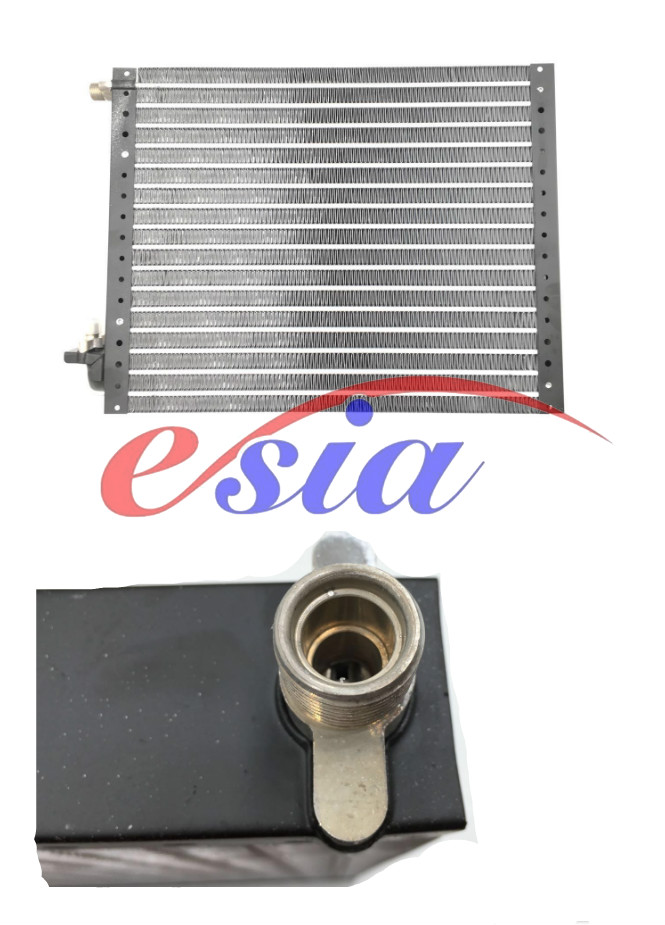
Conversely, a universal AC condenser is essentially a bare heat-exchanging core. Vendors sell these units based on physical dimensions rather than specific vehicle compatibility. You buy them by measuring available space in inches. Most modern universal units utilize highly efficient parallel-flow internal structures.
These blank units lack vehicle-specific hardware. You will notice blank side channels running vertically down the core. Builders use these channels for custom drilling and mounting. The ports feature standard O-ring or flare fittings. You must fabricate custom hoses to connect them. They lack built-in brackets. You carry the full responsibility for securing the unit safely inside the engine bay.
Modern daily drivers greatly benefit from direct replacement parts. The automotive repair industry builds its entire workflow around these components. If you drive a vehicle manufactured within the last twenty years, this route usually makes the most sense.
Zero Fabrication: The unit drops right into the factory radiator support. Factory lines mate perfectly to the connection ports. You avoid cutting, welding, or bending metal. The plastic retaining clips snap right into place.
Predictable Labor Costs: Standard book time applies for professional mechanics. Repair shops quote these jobs accurately because no surprises exist. DIYers can confidently finish this project in a single weekend afternoon.
Warranty Integrity: Manufacturer warranties remain completely straightforward. You use the unit exactly as intended by the factory. You do not modify the core. You do not adapt the fittings. If a defect occurs, claim approval happens rapidly.
Availability: Finding exact matches for vehicles older than 25 years proves difficult. Manufacturers eventually discontinue slow-moving catalog numbers. Classic car restorers often hit a brick wall when searching for original replacements.
Cost Premium: These exact replicas typically carry a higher upfront parts cost. You pay extra for the convenience. Engineering specific brackets and bending complex aluminum lines adds manufacturing expense.
Custom car builders and vintage restoration experts live in a different reality. Standard catalog parts rarely fit heavily modified engine bays. Sometimes, the original parts simply no longer exist. Blank cores solve these complex engineering puzzles.
The Savior for Obsolete Parts: Blank cores become essential when factory units disappear from the market. Vintage vehicle restorations heavily rely on this flexibility. You can always build a cooling system if you start from a dimensional blank slate.
Customization: Builders can easily maximize the core size. Engine swaps often demand superior heat dissipation. A custom radiator setup requires different component packaging. You can buy the largest core your grille opening allows.
Modern Efficiency on Old Cars: Vintage tube-and-fin designs cool poorly. Modern parallel-flow technology dramatically improves thermal efficiency. This upgrade proves absolutely crucial during R-134a refrigerant conversions. The older systems simply cannot handle modern refrigerant pressures effectively.
Custom Hose Fabrication: You cannot reuse your factory AC lines. You must buy specialized tools like hydraulic AC hose crimpers. You must purchase raw bulk barrier hoses. You have to build custom lines to connect the new core to your factory compressor.
Mounting Challenges: You must design and fabricate secure metal brackets. Vibration-induced failure poses a massive risk. If the bare core rubs against the radiator or steel frame, it will quickly develop pinhole leaks. You must use rubber isolators.
Clearance Issues: Precision measurement is mandatory. You must ensure standard electric cooling fans still clear the new core depth. Mechanical fan clutches might also cause dangerous interference. You must measure depth tolerances down to the millimeter.
Choosing between these two options requires a strict evaluation of your resources. You must analyze your available time, your tooling, and your end goals. We broke down the critical decision factors below.
Feature | Direct-Fit Condenser | Universal Condenser |
|---|---|---|
Overall Financial Impact | Wins on labor costs. Mechanics swap these rapidly. | Wins on raw part cost. Loses entirely if you pay a shop for fabrication. |
Installation Speed | Hours. Often completed in a single afternoon. | Days or full weekends. Fabrication takes considerable patience. |
Cooling Performance | Excellent factory-level performance. | Tie or better. Allows for deliberate oversizing if physical space permits. |
Aesthetic/Factory Look | Maintains the OEM engine bay appearance perfectly. | Looks distinctly aftermarket. Requires custom bracketry visibility. |
The matrix highlights a clear divide. The exact-fit option trades upfront part expense for massive labor savings. The blank core trades a cheap initial purchase price for heavy labor demands. Always calculate the value of your own time when planning a weekend garage project.
You need a clear decision framework before opening your wallet. Avoid buying parts based solely on the lowest sticker price. Follow this logic to ensure a successful repair.
You drive a modern daily driver manufactured from 1995 to the present. You plan on paying a professional repair shop by the hour. Alternatively, you want a fast, guaranteed DIY fix. You do not own specialized metal fabrication tools. You need your vehicle back on the road by Monday morning. If any of these statements ring true, skip the blank cores entirely. The exact replica is your only logical choice.
You are actively restoring a classic muscle car. The original factory part is permanently out of stock everywhere. You are performing an intricate engine or chassis swap. You already own AC line crimping tools and raw aluminum bracketry materials. You want to upgrade an ancient R12 system to a modern parallel flow design. If you fit this profile, a blank core unleashes your building potential.
If you choose the custom route, grab a tape measure immediately. Measure your available core space carefully. Document the maximum allowable height, width, and depth. Account for hood latch mechanisms and fan clearances. If you choose the factory route, locate your vehicle identification number (VIN). Cross-reference your exact year, make, and model to ensure perfect fitment. You can also read more about us to understand how we source and verify these critical automotive heat exchangers.
A bare AC core looks incredibly appealing on an e-commerce page due to its low price tag. However, the hidden labor requirements make it a highly specialized solution. It is never a quick fix for a daily commuter car. The extra time spent building brackets and crimping hoses quickly destroys any initial monetary savings.
We strongly recommend checking exact-fit availability first. Treat the factory replica as your primary baseline. You should only pivot to a custom solution out of strict necessity, such as part obsolescence, or specific performance goals. Keep these final action steps in mind:
Verify Catalog Availability: Always search for your specific vehicle application first. Exhaust all premium aftermarket catalogs before giving up.
Audit Your Toolbox: Do not buy a blank core if you lack a hydraulic hose crimper. Buying the required tools negates the cheaper part price.
Measure Twice: If going custom, measure your grille opening multiple times. Remember to account for the thickness of custom mounting brackets.
Plan for Vibration: Never bolt an aluminum core directly to a steel frame. Always incorporate rubber isolation pads into your custom mounts.
A: Yes, you can physically install one. However, it rarely proves cost-effective. Modern factory compressors require highly specific line connections. You must invest heavily in labor to modify standard hoses. The cost of custom fabrication quickly exceeds the savings of a cheaper bare core. Sticking to an exact OEM replacement makes better financial sense.
A: Yes, it yields massive improvements. Classic cars typically utilize outdated tube-and-fin designs. These older designs struggle to dissipate heat efficiently. Upgrading to a modern parallel-flow condenser dramatically increases thermal transfer. This upgrade becomes especially critical when converting an old R12 system to modern R134a refrigerant.
A: You need more than basic hand tools. You must have metal fabrication equipment to build secure mounting brackets. A drill, grinder, and measuring calipers are essential. You also need a specialized AC hose crimping tool. You must purchase raw AC barrier hose and standard O-ring fittings.
A: Yes, reckless modifications void the warranty instantly. Drilling directly into the core tubes ruins the unit. Stripping the aluminum threads during custom fitting also denies any claims. You must mount the unit securely using rubber isolators. Vibration-induced cracks resulting from rigid mounting will void your coverage.


