

close
Choose Your Site
Global
Social Media


Views: 0 Author: Site Editor Publish Time: 2026-09-01 Origin: Site


Are you sweating through another summer afternoon because your HVAC system suddenly stopped cooling? You might be staring at a surprisingly high repair quote today. We understand how stressful it feels when your home loses its comfort. Often, the main culprit is the outdoor component of your split system. Industry professionals briefly define this as the AC condenser. This large metal box sits quietly in your yard until a sudden breakdown disrupts your daily routine.
This guide provides a transparent breakdown of how this crucial equipment actually works. We will compare standard repair costs against full replacement estimates. You will discover a logical framework for making the smartest financial choice for your property. By understanding these mechanical variables, you can confidently negotiate contractor quotes. You will avoid predatory upcharges and restore your indoor comfort efficiently.
The AC condenser unit is responsible for releasing absorbed indoor heat to the outside air.
Minor repairs (capacitors, fan motors) range from $150–$600, while total condenser replacements typically run $1,500–$4,000+ depending on tonnage and SEER2 ratings.
Evaluating a replacement requires assessing system compatibility; replacing *only* the outdoor unit while keeping an old indoor coil often leads to premature failure.
The "$5,000 Rule" (Age × Repair Cost) remains the most objective baseline for the "repair vs. replace" decision.
Your cooling system does not actually create cold air. Instead, it removes heat from your indoor spaces. The condenser plays the starring role in this heat rejection phase. First, the indoor evaporator coil absorbs warm ambient air. The system then sends high-pressure, high-temperature refrigerant gas outside to the condenser cabinet. The condenser receives this hot gas and cools it back into a liquid state. This continuous thermodynamic loop keeps your home comfortable during extreme summer weather.
Understanding your equipment helps you identify potential failures. The outdoor cabinet houses three critical components:
Condenser Coil: This network of metal tubing and fins facilitates rapid heat transfer. It exposes the hot refrigerant to cooler outdoor air.
Compressor: Think of this as the engine of your HVAC system. It pressurizes the refrigerant gas. This pressure pushes the chemical mixture through the entire cooling loop. You will find it housed safely deep inside the condenser cabinet.
Condenser Fan: This large blade assembly sits at the top of the unit. It pulls outdoor air aggressively across the coils. This strong airflow actively dissipates the collected indoor heat into the atmosphere.
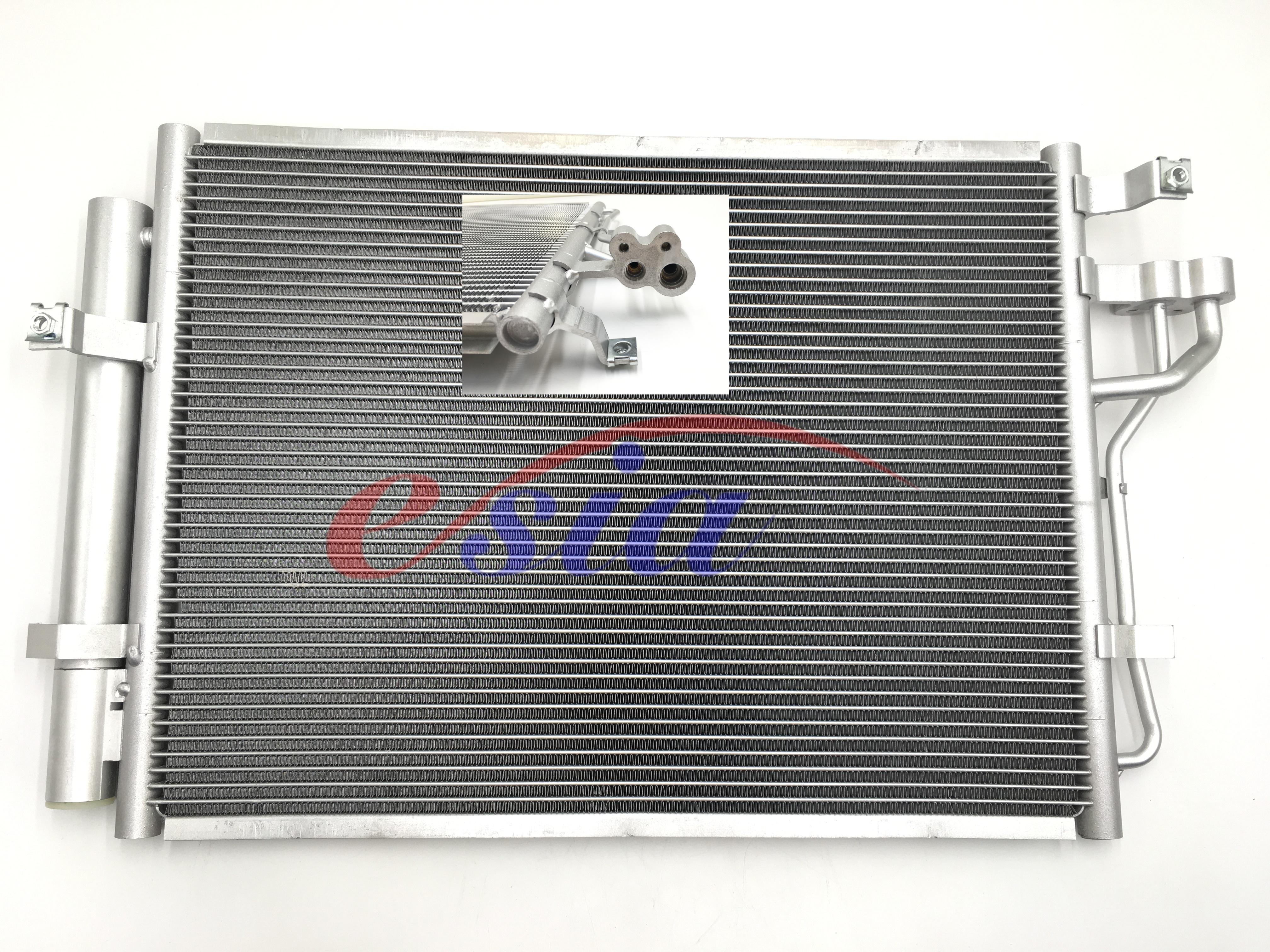
Thermodynamic principles remain highly consistent across different industries. Residential cooling units are massive and stationary. However, they utilize the exact same physical principles as an automotive air conditioning system. In your vehicle, the condenser sits directly in front of the radiator. It catches oncoming air to reject cabin heat effectively. While the scale differs wildly, the mechanical intent remains identical.
Component failures range from cheap fixes to catastrophic expenses. Here is what you should expect for standard repairs:
Run Capacitor / Contactor: These electronic parts carry a low replacement cost but a high failure frequency. Expect to pay between $150 and $300. Power surges and extreme heat easily fry these small components.
Condenser Fan Motor: This represents a mid-tier cost. Replacing a burnt-out motor averages $300 to $600. Bearings wear out over time, especially in dusty environments.
Refrigerant Leak / Coil Repair: This is a high cost and highly variable repair. Fixing leaks ranges from $500 to well over $1,200. Technicians must locate the tiny hole, braze the copper, evacuate the lines, and recharge the expensive chemical refrigerant.
Sometimes equipment degrades beyond reasonable repair. Base hardware prices vary heavily by tonnage. Most residential homes require 1.5 to 5 tons of cooling capacity. Premium brand names also command higher hardware prices. Installation labor heavily depends on regional contractor rates. Technicians might need to pour a new concrete pad or run completely new copper line sets.
Component or Service | Estimated Cost Range | Key Pricing Factors |
|---|---|---|
Base Unit (Hardware only) | $900 - $2,500 | Tonnage capacity, brand tier, SEER2 efficiency rating. |
Installation & Labor | $600 - $2,000+ | Regional labor rates, pad leveling, new line sets. |
Average Total Range | $1,500 - $4,500+ | Standard residential replacements without ductwork changes. |
Several external factors will impact your final quote. Global supply chain realities frequently alter hardware availability. The industry is currently transitioning to mildly flammable R-454B refrigerants. This chemical shift increases manufacturing costs. Finally, emergency call-out fees will severely inflate your final bill. Calling a technician on a holiday weekend guarantees a premium charge.
Making a fast decision under pressure often leads to buyer's remorse. We recommend using a strict evaluation framework. This removes emotion from the equation entirely.
Decision Metric 1: The $5,000 Rule. Multiply your equipment’s age in years by the estimated repair cost. If the resulting total exceeds $5,000, replacement is statistically the sounder financial decision. For example, a ten-year-old unit facing a $600 repair totals $6,000. You should replace it.
Decision Metric 2: Refrigerant Phase-Outs. Environmental regulations change constantly. Units utilizing old R-22 Freon are entirely obsolete today. Repairing leaks in these older systems is highly cost-prohibitive. Refrigerant scarcity drives R-22 prices astronomically high.
Decision Metric 3: Warranty Status. Always verify your paperwork. Check if the unit falls within its typical 5-to-10-year registered parts warranty. An active warranty severely alters the repair cost math. It shifts the financial burden primarily to labor fees alone.
Decision Metric 4: Energy Efficiency Loss. Mechanical systems degrade over time. Older units lose SEER efficiency annually due to wear and tear. You must factor in the monthly utility penalty. Nursing a degraded unit inflates your summer electric bills significantly.
Consumers naturally want to save money during a cooling crisis. You might feel tempted to replace only the broken AC Condenser Unit while leaving the old indoor components untouched. Keeping the old indoor evaporator coil seems like a clever financial shortcut. Unfortunately, this mismatched system approach often leads to disastrous mechanical failures.
Modern equipment operates at very high efficiency levels. Pairing a modern 15+ SEER2 condenser with an older 10 SEER indoor coil heavily throttles performance. The old indoor coil simply cannot process the advanced output of the new outdoor machinery. This bottleneck completely negates your expected energy savings.
Technology moves incredibly fast in the HVAC industry. Modern condensers use entirely different chemical refrigerants today. They also operate at vastly different pressure levels than coils manufactured ten years ago. Pumping high-pressure modern refrigerant into an old, weak indoor coil usually causes the old copper lines to burst.
Tier-one HVAC manufacturers protect their products fiercely. Most major brands will instantly void your new equipment warranty if they discover a mismatch. The outdoor unit must be paired correctly. You must install a certified, matching AHRI-rated indoor coil to keep your protection active.
Bigger is not always better in residential cooling. Emphasize the absolute necessity of a formal Manual J load calculation. Do not let a contractor use a lazy "rule of thumb" square-footage guess. A proper calculation measures your windows, insulation, and home orientation. Accurate sizing prevents short-cycling. It ensures your home remains cool and adequately dehumidified.
System Tier Level | Operational Capacity | Cost Profile & Comfort Benefits |
|---|---|---|
Single-Stage | Operates at 100% capacity only. | Baseline cost. It turns on full blast or stays completely off. Good for mild climates. |
Two-Stage | Operates at 60% or 100% capacity. | Moderate initial cost. Provides much better humidity control and quieter daily operation. |
Variable-Speed (Inverter) | Adjusts in tiny, infinite increments. | Highest initial cost. Delivers maximum energy efficiency and absolute temperature precision. |
Noise pollution easily ruins a quiet summer evening. Evaluate equipment decibel (dB) ratings carefully during your shopping phase. Acoustic ratings matter immensely if the unit sits near a bedroom window. They also matter if you place the machine next to a frequent outdoor entertainment patio. Variable-speed units typically offer the quietest sound profiles.
Local building codes dictate what you can legally install. Check your regional SEER2 minimums carefully. The southern United States requires higher efficiency baselines than the northern states. Additionally, investigate potential IRA (Inflation Reduction Act) federal tax credits. These generous government rebates apply heavily to qualifying high-efficiency heat pumps and top-tier cooling condensers.
Restoring your home comfort requires a methodical approach. First, hire a professional to diagnose the specific mechanical failure accurately. Apply the $5,000 rule to any quoted repair bill to gauge its financial viability. Always check your registered warranty status before agreeing to major expenses.
Your best next step involves aggressive quote comparison. Advise your family to secure at least three itemized bids from licensed HVAC contractors. Read the fine print carefully. Ensure these quotes specifically state whether the indoor evaporator coil is included in the total replacement price. Taking these calculated steps guarantees a reliable cooling system for years to come.
A: No, you must shut the system down immediately. Running your air conditioner without a working outdoor fan risks catastrophic compressor failure. The fan dissipates the heat removed from your home. Without it, the compressor will severely overheat and destroy itself in a matter of hours.
A: Most standard residential units last between 12 and 15 years. This timeline depends heavily on your geographic location. Coastal proximity exposes coils to corrosive salt air, shortening their life. Strict adherence to annual maintenance and moderate usage cycles will help extend the equipment's lifespan.
A: Compressor replacement labor is incredibly intensive and expensive. Rebuilding or swapping just the compressor rarely makes sense for equipment over ten years old. Replacing the entire outdoor cabinet provides brand-new internal components and a fresh warranty. It is almost always a more reliable long-term investment.
A: It depends strictly on your specific policy terms. Home warranties usually demand formal proof of annual professional maintenance. They will also deny claims aggressively if they suspect pre-existing conditions. Always read the fine print of your contract before expecting full coverage on major HVAC breakdowns.


