

close
Choose Your Site
Global
Social Media


Views: 0 Author: Site Editor Publish Time: 2026-10-15 Origin: Site


Heavy-duty cooling systems rely on specific operating windows to function properly. When ambient temperatures climb above 90°F (32°C), thermal exchange efficiency drops drastically. Fleet managers and owner-operators often misdiagnose core cooling failures during peak summer months. They might repeatedly replace compressors. They wrongly assume the pump failed. In reality, the true bottleneck is often a heat-saturated condenser. Extreme heat prevents it from shedding thermal loads. Addressing this requires more than just finding a basic part. You must evaluate replacement units built explicitly for high-thermal-load environments. Simply matching OEM dimensions is never enough. This article explains how extreme heat disrupts thermodynamics. We will explore compounding stress variables across highway and off-highway applications. You will learn the business impact of these sudden failures. Finally, we provide specific criteria to help you select structurally robust cooling components for extreme climates.
Extreme ambient heat prevents the condenser from effectively converting refrigerant gas back into a liquid, causing system-wide pressure spikes.
Secondary operational stressors—such as heavy towing, low-speed excavation, and worksite debris—compound ambient heat, accelerating condenser degradation.
Evaluating replacement condensers requires analyzing fin density, tube construction (e.g., micro-channel vs. tube-and-fin), and anti-corrosion coatings for long-term ROI.
Proper implementation requires system flushing and verifying fan clutch engagement, as a new condenser cannot compensate for broader airflow deficits.
Air conditioning systems do not create cold air. They remove heat from the cabin. The condenser plays a crucial role in this cycle. It relies on the temperature delta between hot refrigerant and outside air. Refrigerant enters the condenser as a high-pressure, high-heat gas. The outside air must be significantly cooler to absorb this heat. As ambient heat rises, this temperature delta shrinks. The condenser struggles to shed thermal energy. The phase change fails to occur properly. Refrigerant remains a gas instead of converting into a liquid. This thermal saturation halts the entire cooling process.
Thermal saturation creates immediate mechanical consequences. Un-condensed gas takes up more volume than liquid refrigerant. This volume expansion causes abnormally high high-side pressures. Technicians often refer to this as head pressure. The compressor must push against this extreme resistance. It forces the compressor to work far beyond its design limits. Internal temperatures soar. The compressor clutch slips or burns out. High pressure also triggers the high-pressure cutoff switch. This causes the system to shut down repeatedly. Operators experience this as intermittent cooling during the hottest parts of the day.
Refrigerant becomes highly volatile under extreme heat and pressure. Operating pressures consistently exceed standard baseline thresholds. These spikes stress every component in the system. O-rings and rubber hoses expand and degrade rapidly. This degradation increases the risk of micro-leaks. Refrigerant slowly escapes over time. A low refrigerant charge then forces the system to work even harder. It becomes a destructive cycle. High heat also breaks down compressor oil. The oil loses its lubricity. Metal components grind together. They send destructive metal shavings throughout the entire AC loop.
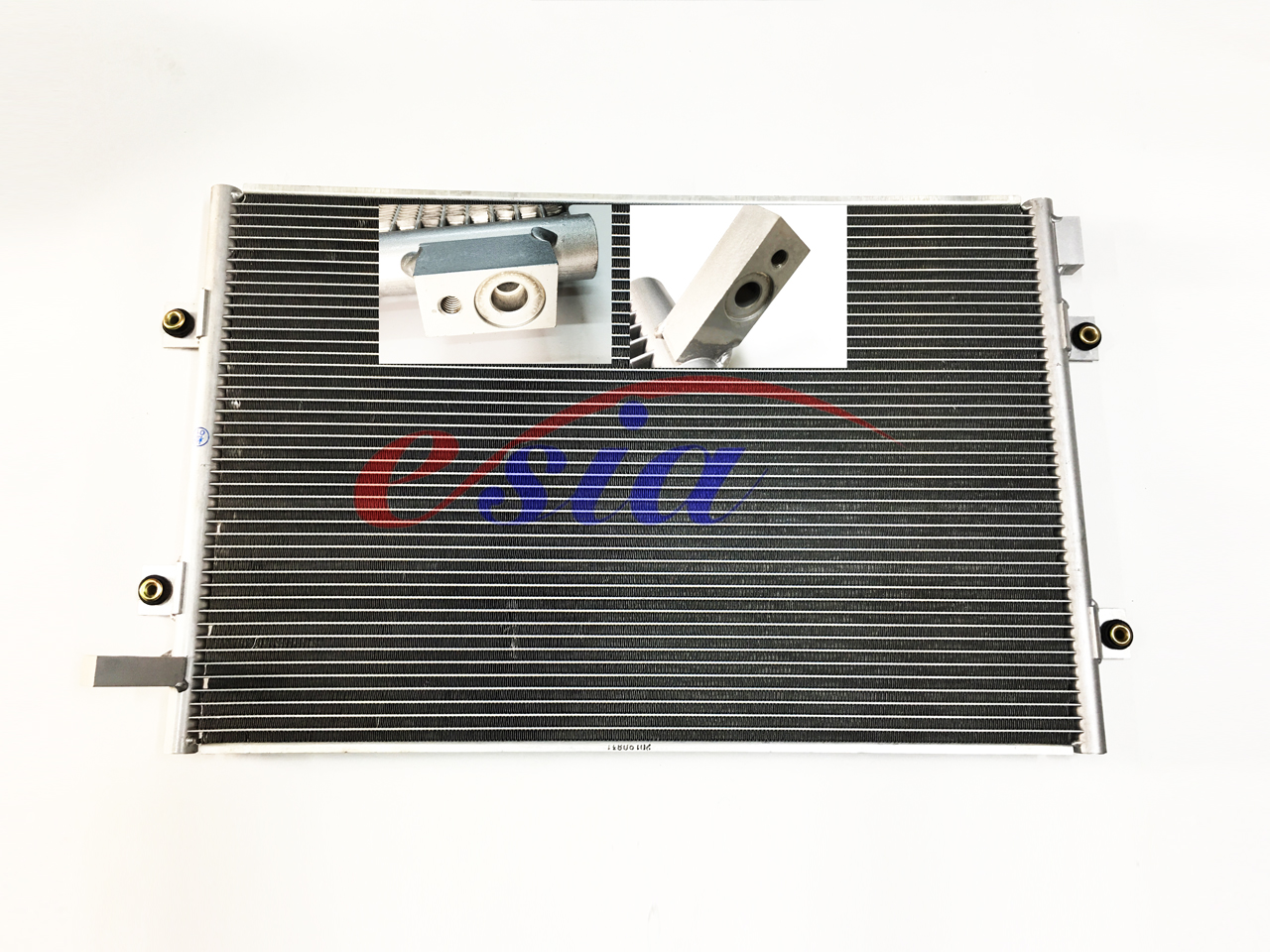
Highway driving introduces unique challenges. Towing heavy loads at steep grades pushes engines to their absolute limits. The engine block generates massive amounts of radiant heat. Engine bay temperatures soar well above ambient levels. A standard truck AC condenser usually sits in front of the radiator. However, it still absorbs radiant heat from the engine block. Furthermore, hot asphalt reflects heat upward. The condenser must cool hot refrigerant using already-heated air. This compounded heat load makes standard OEM condensers highly vulnerable during summer freight runs.
Construction equipment operates in vastly different conditions. Earthmoving requires low-speed, high-RPM operations. Vehicles lack the ram-air effect generated by highway speeds. Airflow relies entirely on mechanical fans. Environmental debris severely worsens the situation. Dust, silica, and mud constantly swirl around the machine. This debris clogs the delicate fins of an excavator AC condenser. Dirt packs tightly between the cooling fins. It effectively acts as a thermal insulator. Heat becomes trapped inside the core. The condenser cannot breathe. Phase change stops completely.
Airflow volume dictates cooling efficiency. Standard mechanical or viscous fan clutches often fail under extreme idling. They simply cannot provide sufficient cubic feet per minute (CFM). Summer conditions demand maximum airflow. A worn fan clutch might spin, but it lacks the necessary engagement force. It slips under heavy loads. Reduced CFM starves the condenser of fresh air. You might install a brand-new, premium condenser. However, it will still fail if the fan clutch cannot pull enough air through the core.
Ignoring condenser health leads to massive expenses. A proactive condenser replacement remains relatively inexpensive. You swap the part, pull a vacuum, and recharge the system. Catastrophic compressor failure changes the math completely. A failed compressor spreads metal debris everywhere. You must replace the compressor, the expansion valve, and the receiver drier. You must also perform rigorous system flushing. The cascading costs quickly multiply. Vehicle downtime extends from hours to days. Fleet managers lose revenue for every hour a machine sits in the shop.
Cabin comfort directly impacts operator performance. Consider these crucial safety and productivity factors:
Operator Fatigue: High cabin temperatures drain operator energy. Reaction times slow down significantly.
Safety Incidents: OSHA and international thermal stress guidelines warn against extreme heat exposure. Fatigued operators make mistakes. Accident probabilities increase.
Cycle Times: In earthmoving, uncomfortable operators take more breaks. They work slower. Overall cycle times increase, delaying project completion.
Turnover: Drivers and operators expect safe working conditions. Constant AC failures lead to high employee turnover rates.
AC system inefficiency wastes fuel. A heat-saturated condenser causes head pressures to spike. The compressor requires more mechanical force to turn. This creates parasitic engine drag. The engine must burn more fuel to overcome this resistance. Furthermore, a struggling AC system rarely cycles off. The compressor stays constantly engaged. This constant load measurably reduces fuel efficiency across an entire fleet. In a high-mileage trucking operation, this parasitic loss costs thousands of dollars annually in wasted diesel.
Buyers must choose between two primary condenser designs. Parallel flow (micro-channel) designs offer superior heat transfer. They pack more cooling capacity into a smaller footprint. They work exceptionally well for highway trucks. However, micro-channel tubes are extremely narrow. They are highly susceptible to internal blockage. Even minor system debris will plug them. Traditional tube-and-fin designs use larger internal passages. They do not cool quite as efficiently as micro-channel units. Yet, they handle internal debris much better. They often suit off-highway construction equipment perfectly.
Heavy machinery endures constant vibration. Standard aftermarket condensers often use thin, cheap aluminum. They crack under heavy stress. You must check the aluminum grade and core thickness before purchasing. Thicker headers provide better structural rigidity. Robust mounting brackets are absolutely required. Weak brackets snap on rough terrain. They allow the condenser to rub against the radiator. This friction quickly causes a catastrophic refrigerant leak. Investing in heavy-duty materials prevents premature structural failures.
Fin density determines cooling potential and clogging risk. Manufacturers measure this in Fins Per Inch (FPI). High FPI numbers mean tight, dense fins. Low FPI numbers mean wide, open fins.
Condenser Fin Density Analysis
FPI Rating | Application Type | Cooling Efficiency | Debris Clogging Risk |
|---|---|---|---|
High (18-22 FPI) | On-Highway Trucks | Excellent | High (Requires clean air) |
Medium (14-17 FPI) | Mixed Fleet / Delivery | Good | Moderate |
Low (10-13 FPI) | Off-Highway / Excavators | Fair | Low (Easier to wash out) |
Higher fin density offers better heat dissipation. However, it clogs much faster in dusty environments. Guide your buyers to select the right FPI based on their exact application.
Raw aluminum oxidizes quickly in harsh environments. Coastal areas expose equipment to salt air. Winter-salted roads coat undercarriages in corrosive brine. Mining operations expose machinery to acidic soil and water. Corrosion eats away at condenser fins. The fins turn to powder and fall off. This destroys cooling capacity. Discuss the necessity of protective coatings. Epoxy or zinc-coated condensers resist oxidation. These treatments extend component longevity dramatically. They protect your investment in severe operating environments.
Replacing a thermally stressed condenser requires strict procedures. You must ensure absolute systemic cleanliness. You cannot simply bolt on a new part. A struggling compressor likely shed microscopic metal shavings. These shavings hide inside the hoses and evaporator. Leftover metal debris will immediately ruin a new micro-channel condenser. Technicians must use specialized chemical flushes. They must push the flush through every line using high-pressure nitrogen. Bypassing this step guarantees a repeat failure within weeks.
Summer brings out bad maintenance habits. Many operators attempt to "top off" the system. They think extra refrigerant yields colder air. This is a massive mistake. Overcharging increases internal system pressure. It actually worsens high-pressure heat stress. The condenser cannot phase-change excess fluid. The system shuts down completely. Technicians must evacuate the system fully. They must weigh the new refrigerant on an accurate digital scale. They must also add the exact correct amount of PAG or POE oil. Precision is mandatory.
A new condenser cannot fix a broken fan. Technicians must audit the entire cooling stack during installation. They must test the cooling fan engagement at operating temperatures. They must inspect the fan shroud integrity. A cracked shroud allows air to bypass the condenser core. They must also check the radiator exterior cleanliness. A plugged radiator restricts air from pulling through the condenser in front of it. Verifying optimal airflow ensures the new condenser functions as engineered.
Surviving high ambient temperatures requires strategic purchasing. You must move away from cheap aftermarket replacements. Standard parts fail rapidly under extreme thermal loads. Investing in structurally robust, application-specific cooling components protects your fleet. Heavy-duty construction demands proper fin spacing. Highway towing requires maximum heat dissipation. Analyze the specific stressors your vehicles face daily. Pre-summer maintenance is critical. Recommend fleet maintenance directors conduct early AC pressure tests. Perform visual fin inspections before the heatwaves arrive. Shortlist vehicles requiring proactive condenser upgrades. Preventative action stops cascading mechanical failures. To understand more about our premium cooling solutions, you can read about us and our commitment to fleet durability.
A: Maintenance intervals depend heavily on the operating environment. You should clean excavator condensers weekly using low-pressure water or compressed air due to severe dust. Highway trucks generally require visual inspections and monthly cleanings. Always blow debris outward from the engine side to avoid packing dirt deeper into the fins.
A: Verifiable symptoms include persistent high-side pressure gauge readings even after cleaning. You will also notice bent, crumbling, or heavily oxidized cooling fins. Another major sign is the compressor short-cycling rapidly during peak daylight hours, indicating the system cannot shed its thermal load.
A: OEM guarantees fitment, but it is not always the best choice for extreme conditions. Premium heavy-duty aftermarket options often feature upgraded core thicknesses. They also utilize better anti-corrosion coatings and application-specific fin densities. These upgrades are specifically engineered to outlast standard OEM parts in high-thermal and high-vibration environments.


