

close
Choose Your Site
Global
Social Media


Views: 0 Author: Site Editor Publish Time: 2026-07-29 Origin: Site


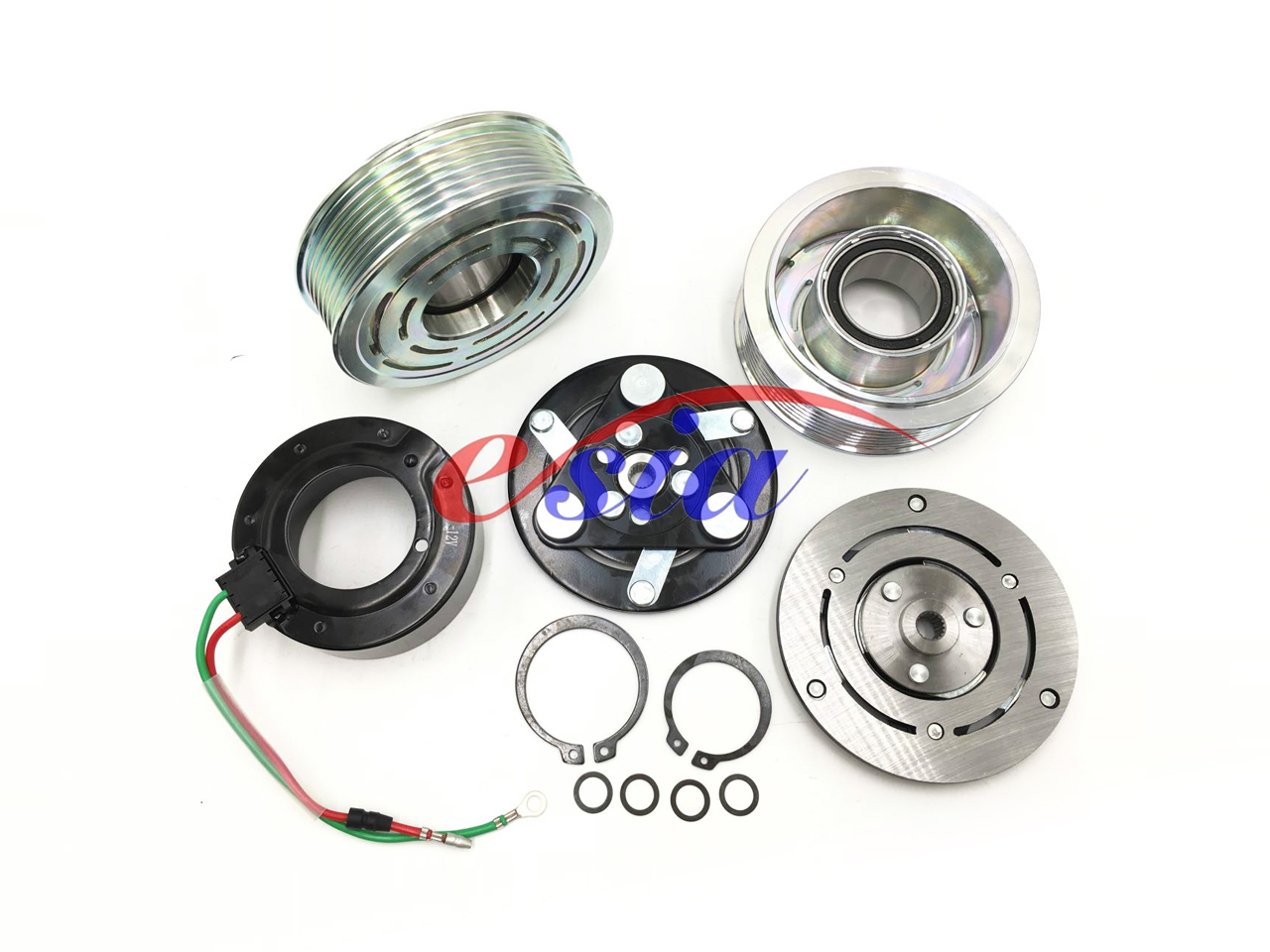
When the cabin vents blow warm air, panic often sets in. Vehicle owners and fleet managers face a sudden disruption to their daily operations. Modern auto diagnostics require precise knowledge to tackle these cooling failures effectively. A critical decision emerges when HVAC systems fail. You must understand the exact hardware under the hood to avoid unnecessary replacement costs. Misidentifying the components can lead to wasted labor and parts.
The automotive industry has transitioned between two distinct car AC system types: traditional cycling clutches and modern clutchless variable displacement designs. This guide provides a clear, technical comparison of these two systems. You will learn how they fail, how professionals diagnose them, and the financial realities of repairing versus replacing them.
An AC compressor magnetic clutch operates on a binary on/off cycle, making it easier to diagnose mechanically but inherently less fuel-efficient.
Continuous drive (clutchless) compressors utilize internal variable displacement valves, offering smoother operation and better MPG, but generally require full unit replacement upon failure.
Diagnosis hinges on visual and mechanical cues: a traditional clutch pulley stops spinning when disengaged, whereas a continuous drive pulley spins as long as the engine is running.
Repair decisions should be based on labor costs, system contamination, and the availability of specialized puller tools versus refrigerant evacuation equipment.
Misdiagnosing a compressor often stems from misunderstanding its baseline operational mechanics. If you do not grasp how the hardware functions normally, you cannot accurately identify a fault. Modern vehicles utilize completely different engineering approaches to manage cabin climate. Let us explore the fundamental mechanics driving these systems.
This design represents the traditional approach to automotive climate control. It relies on a robust electromechanical engagement process. The system uses an electromagnetic coil situated behind a belt-driven pulley. When the climate control demands cooling, electricity flows through this coil. The resulting magnetic field pulls a front friction plate against the spinning pulley. This action physically engages the main compressor shaft. You can find high-quality examples of this mechanism when searching for a reliable AC Compressor Magnetic Clutch.
Operation follows a strict binary pattern. It cycles entirely on or completely off based on sensor inputs. Evaporator temperature sensors monitor the cabin cooling demand. System pressure switches monitor the high and low-side refrigerant levels. The engine control module reads these inputs. It then commands the relay to power or interrupt the clutch circuit. This creates a distinct mechanical engagement event.
Visual cues make this system highly recognizable. The center hub remains stationary while the engine runs without AC demand. It only spins when the AC actively engages. Mechanics use this visual confirmation as the first step in troubleshooting. If the inner hub stops spinning, the compressor ceases pumping.
Automotive engineering evolved to prioritize efficiency. This evolution introduced the continuous drive compressor. This system completely Abandons the traditional external electromagnetic engagement. It features a direct-drive pulley permanently affixed to the internal shaft. A breakaway safety hub replaces the traditional friction plate. Inside the housing, an internal swash plate dictates the refrigerant flow.
An electronic Pulse Width Modulated (PWM) valve controls this swash plate. The vehicle sends varying electrical signals to this valve. We can break down this operational flow into a specific sequence:
The engine control unit calculates exact cabin cooling requirements.
The module sends a precise PWM signal to the compressor control valve.
The valve alters the internal crankcase pressure.
The pressure change adjusts the angle of the internal swash plate.
The compressor adjusts refrigerant displacement dynamically from 2% to 100%.
This unit constantly spins alongside the engine. It never disengages mechanically. Instead, it alters its pumping capacity to match demand perfectly. Visual cues differ drastically from traditional units. The pulley and the center shaft spin continuously anytime the engine runs. You cannot rely on a stationary hub to indicate a disabled AC system.
Comparing operational outcomes helps buyers make informed choices. You might evaluate OEM replacements or explore aftermarket alternatives. Understanding performance metrics ensures you select appropriate replacement strategies. Let us look at a detailed automotive HVAC clutch comparison focusing on real-world behavior.
Fuel efficiency drives modern automotive design. Continuous drive units reduce parasitic engine load significantly. They match cooling demand precisely without overworking the engine. When cabin temperatures stabilize, they reduce displacement to a bare minimum. Conversely, magnetic clutches draw peak torque every time they engage. This constant cycling forces the engine to burn more fuel to maintain idle speed.
Temperature stability also highlights a major difference. Variable displacement eliminates slight temperature fluctuations. Older systems often produce noticeable shifts in vent temperatures. You feel these shifts during the rapid on/off cycling of an AC compressor magnetic clutch. Continuous systems maintain a flat, consistent cooling curve.
Engineers focus heavily on Noise, Vibration, and Harshness (NVH). Continuous drives eliminate audible mechanical clicks. Engine RPM dips disappear completely. Traditional magnetic clutches always create minor disturbances upon engagement. Passengers often hear a sharp click followed by a slight engine shudder. Variable systems offer a seamless, invisible user experience.
Below is a quick reference chart outlining the performance divergence:
Performance Metric | Magnetic Clutch System | Continuous Drive System |
|---|---|---|
Fuel Efficiency | Lower (Binary load spikes) | Higher (Variable demand matching) |
Cabin Temp Stability | Fluctuates slightly during cycles | Highly consistent and stable |
NVH Levels | Audible engagement click | Silent operation |
Engine RPM Impact | Noticeable dip upon engagement | No sudden RPM disruptions |
Decision-stage buyers need clear diagnostic paths. You must know if the current issue remains localized to the drive mechanism. Sometimes the failure sits deep inside the compressor body. Accurate diagnosis prevents wasteful part swapping. Professionals rely on specific symptoms to isolate these complex failures.
Troubleshooting begins by dividing electrical faults from mechanical wear. Testing for a burnt electromagnetic coil requires a digital multimeter. You disconnect the wiring harness and measure the coil resistance. A reading of infinity indicates a broken internal wire. A reading near zero suggests a dead short. Normal coils typically show a few ohms of resistance.
Mechanical wear also plagues these systems. You must inspect the friction material on the front plate. Heavy scoring or bluing indicates severe heat damage. Technicians also measure the air gap. The space between the pulley and the friction plate must remain within strict factory tolerances. Too wide of a gap prevents the electromagnet from pulling the plate in.
Bearing noise provides another clear symptom. A failing clutch pulley bearing squeals loudly. This specific noise happens when the AC is turned off. The pulley spins freely on the bearing while the inner hub remains stationary. It may quiet down once the clutch engages. Engagement locks the whole assembly together, temporarily silencing the damaged bearing races.
These modern units present entirely different troubleshooting challenges. The most common failure involves the electronic control valve. It gets clogged by microscopic debris or fails electronically. The PWM signal reaches the compressor perfectly. The pulley spins smoothly. However, the system produces absolutely zero cooling. The swash plate remains stuck at minimum displacement.
Internal breakage presents a far more severe scenario. The unit spins continuously alongside engine RPMs. Internal catastrophic failures often happen due to low lubrication or excessive heat. When internal components shatter, they do not stop moving. The continuous rotation grinds internal metals into fine powder.
This failure spreads debris rapidly through the entire HVAC system. Technicians refer to this as "black death." You will find dark gray sludge inside the refrigerant lines. This sludge forces a complete system overhaul. You cannot simply flush it out easily.
Key Diagnostic Steps for Continuous Drives:
Verify PWM signal presence using a duty-cycle multimeter.
Check high and low side pressures using manifold gauges.
Inspect the breakaway safety hub for shearing or damage.
Examine the orifice tube or expansion valve for metal debris.
Vehicle owners face a critical dilemma upon diagnosis. Can you replace just the drive mechanism? Do you need a completely new assembly? You must balance implementation difficulty against long-term reliability. We frame this decision around labor intensity, tooling requirements, and system contamination risks.
Replacing just the clutch assembly offers several distinct advantages. You can often complete this repair without opening pressurized refrigerant lines. This saves significant labor time. You avoid the lengthy process of refrigerant recovery, deep vacuuming, and precision recharging. It keeps the original factory seal intact.
However, this targeted repair carries notable drawbacks. You need specialized puller tools to remove the old hub. Modern engine bays offer extremely limited clearance. Technicians often struggle to fit these tools while the compressor remains mounted. You also risk leaving a fatigued older compressor body in service. A new clutch cannot save worn internal pistons.
Continuous drive systems almost always require total assembly replacement. Replacing the entire unit provides a guaranteed clean slate. It completely eliminates the risk of internal metal shavings lingering inside the mechanism. You gain peace of mind knowing all internal valves and bearings are factory fresh.
The drawbacks center around procedural intensity. Total replacement mandates full refrigerant recovery. It requires strict adherence to environmental regulations. You must also evacuate the system using a specialized vacuum pump to remove moisture. Furthermore, OEMs often require replacing the condenser and expansion valve simultaneously. This strict protocol maintains warranty compliance and prevents residual debris from destroying the new unit.
Decision makers evaluate the cost-to-outcome ratio carefully. A clutch-only replacement makes financial sense for vehicles with low mileage. Diagnostic testing must prove the compressor internals remain pristine. The system must hold pressure perfectly. If these conditions exist, localized repair minimizes labor significantly.
Otherwise, total assembly replacement offers a lower risk of secondary failure. High-mileage compressors often fail shortly after receiving a new external clutch. The financial reality of paying for labor twice outweighs the initial savings of a targeted repair. For continuous drive systems, complete replacement remains the only viable industry standard.
The choice between repairing or replacing HVAC components relies heavily on initial OEM engineering. An AC compressor magnetic clutch and a continuous drive unit serve the same fundamental purpose. However, they are rarely interchangeable. Understanding their distinct mechanical differences prevents costly diagnostic errors and ensures reliable climate control restoration.
Actionable advice dictates your repair strategy. If evaluating a repair on a traditional cycling system, prioritize testing the coil resistance and measuring the physical air gap before condemning the whole unit. For variable displacement systems, always focus your primary diagnostics on the electronic PWM control valve and check for internal metal contamination.
Your next step requires careful verification. Consult your specific vehicle service manual to confirm your exact hardware configuration. Once identified, source high-quality OEM-equivalent parts to ensure proper electronic integration and mechanical longevity. Precise knowledge remains your best tool for automotive HVAC maintenance.
A: It depends on the system. On a continuous drive compressor, yes, it always spins with the engine. On an AC compressor magnetic clutch system, the center hub should only spin when the AC is turned on.
A: Yes, if the compressor internals are healthy and the system holds pressure, replacing just the clutch assembly (coil, pulley, and plate) is a viable, cost-saving repair.
A: Generally, no. Continuous drive compressors require specific ECU signals (PWM) to control the internal valve, which older cycling-clutch vehicles are not programmed to provide.


