

close
Choose Your Site
Global
Social Media


Views: 0 Author: Site Editor Publish Time: 2026-08-12 Origin: Site


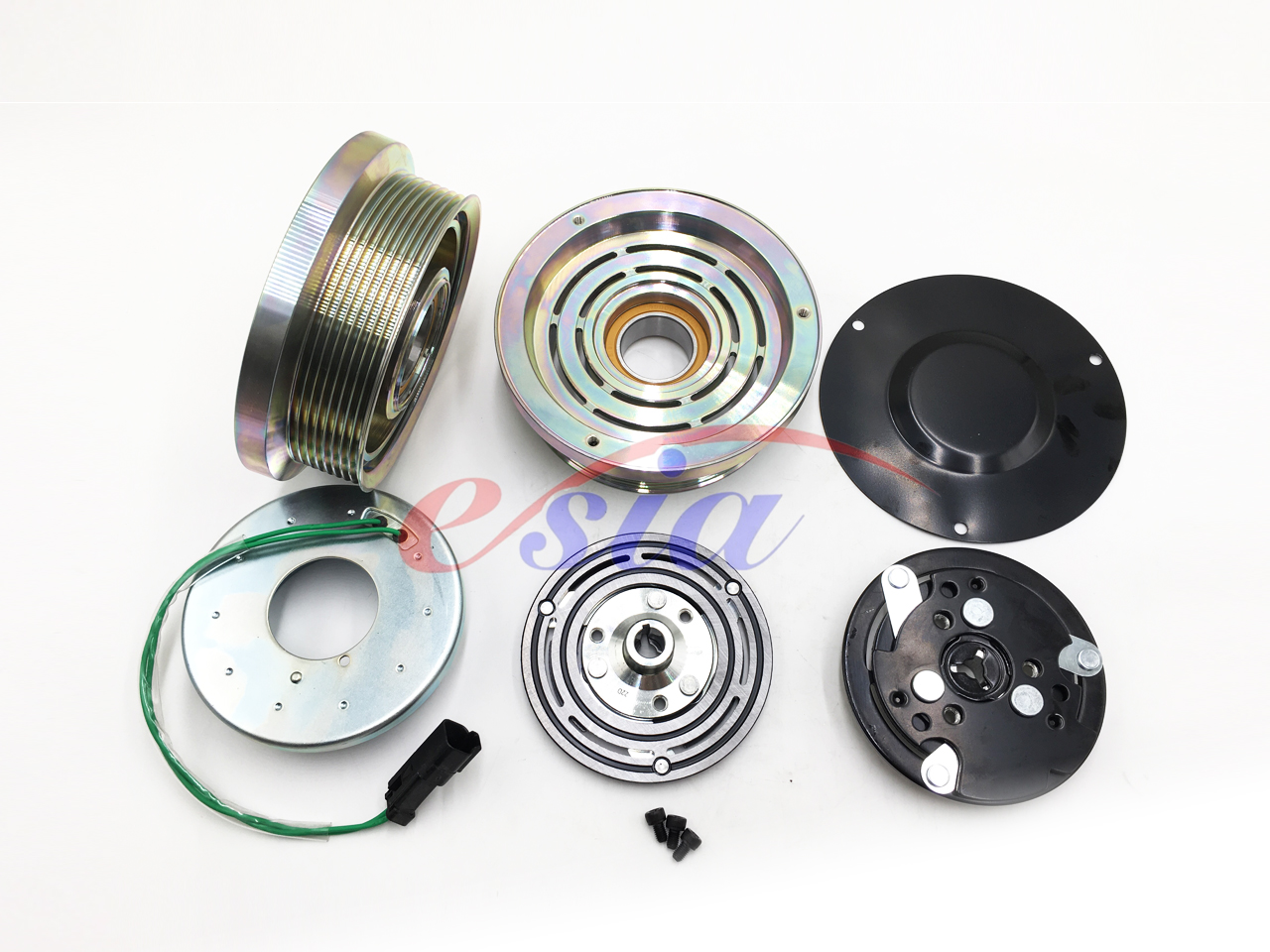
The climate control system in modern vehicles relies on seamless power engagement. The heart of this operation is the mechanical linkage transferring engine power. You need a reliable component to engage and disengage the compressor safely. Specifying the wrong AC Compressor Magnetic Clutch carries heavy consequences for your entire fleet. You might face premature bearing failure or rapid coil burnout. System inefficiency often leads to increased warranty claims and unexpected downtime.
This article provides engineers, fleet managers, and procurement teams a clear evaluation framework. You will learn how to assess structural configurations and thermal management limits accurately. We will explore how to select the exact clutch type for your specific vehicular application. By understanding these mechanical principles, you can mitigate risks and ensure long-term operational reliability.
The choice between a single plate magnetic clutch and a multi plate compressor clutch depends heavily on required torque capacity and spatial constraints.
Thermal management and friction material degradation are the primary failure points in heavy-duty applications.
Proper alignment (air gap tolerance) during implementation is as critical to the lifespan of the HVAC compressor clutch system as the component's inherent build quality.
Evaluating OEM vs. aftermarket options requires analyzing static torque ratings, coil insulation classes, and NVH (Noise, Vibration, Harshness) characteristics.
Selecting the right component requires matching its structural design to engine load. Cooling demands dictate how we evaluate different automotive compressor clutch types. You must analyze the torque transfer requirements before finalizing any engineering specification. Let us break down the primary structural configurations available today.
This design features straightforward construction. It includes a rotor, a stator coil, and an armature plate. The simplicity makes them highly cost-effective to manufacture. They also maintain a low rotational mass. Engineers favor this design when weight reduction is a primary vehicle goal. The magnetic field pulls the armature plate against the rotor friction surface. This action locks the pulley to the compressor shaft.
These units shine in standard passenger cars. Light commercial vehicles also use them effectively. They handle predictable, moderate cooling loads quite well. You will find them across millions of daily commuter vehicles globally.
Be cautious during specification. A single plate unit is prone to slipping if you apply it to high-torque compressors. They have limited heat dissipation under continuous heavy load. When the plate slips, friction generates intense heat. This heat quickly melts the epoxy potting inside the stator coil.
This variant utilizes multiple stacked friction disks. The design multiplies torque transfer efficiently. It achieves this without increasing the clutch's outer diameter. The stacked plates create a larger total friction surface area. They handle extreme rotational forces smoothly.
Use them for heavy-duty transit buses. Long-haul trucks require them. Agricultural equipment also needs a high-capacity HVAC system to function in extreme heat. These vehicles utilize large displacement compressors. Single plates simply cannot grip hard enough to turn these massive internal components.
They carry a higher initial cost. You must implement precise thermal management. This prevents the internal plates from warping under stress. If one plate warps, the entire stack loses its parallel alignment. This leads to dragging and eventual mechanical binding.
These integrate seamlessly into variable displacement compressors. They allow for modulated engagement. They avoid strict on/off cycles entirely. Internal sensors dictate the exact level of engagement required. They use Pulse Width Modulation (PWM) signals to adjust the clamping force dynamically.
Modern fuel-efficient vehicles rely on them heavily. Hybrids prioritize continuous minor adjustments over raw torque. By eliminating sudden engagement shocks, they protect delicate accessory drive belts. They also improve overall fuel economy by only drawing the exact power necessary for the current cooling demand.
You must match the clutch type to your vehicle class operational realities. Different environments demand distinct performance traits. Let us examine how specific vehicles dictate engineering choices.
Passenger Vehicles (Daily Commute & Highway): Focus heavily on NVH reduction. The clutch must engage smoothly. It should never transfer sudden shock to the serpentine belt system. Smooth operation prevents premature belt wear. Engineers often specify rubber dampeners inside the armature plate. These dampeners absorb the initial engagement impact. They keep the cabin quiet during AC cycling.
Commercial Transport (Buses & Trucks): Durability takes precedence here. Continuous operation generates intense heat. You require high-temperature coil insulation. Heavy-duty bearings must withstand elevated under-hood temperatures. Double-row angular contact bearings are often mandatory. They support the massive belt tension found on heavy diesel engines.
Off-Highway & Agricultural: Environmental sealing is your main focus here. Farm tractors and construction loaders operate in harsh conditions. You need robust dust covers. Corrosion-resistant coatings are mandatory. They prevent abrasive wear on exposed friction surfaces. Zinc-nickel plating offers excellent defense against agricultural chemicals and road salt.
When aligning these systems, follow this exact evaluation process:
Measure the peak ambient operating temperatures inside the engine bay.
Calculate the average engagement cycle frequency per hour.
Assess the environmental exposure levels for dust, moisture, and salt.
Define the acceptable NVH thresholds for the vehicle cabin.
Select the appropriate bearing seal type to prevent internal grease loss.
Decision-makers need a strict checklist. You must vet manufacturers and verify component specifications accurately. We will outline the critical metrics to evaluate before signing bulk procurement contracts.
Torque Transfer Capacity vs. Size: Always verify static and dynamic torque ratings. Compare them against the compressor's maximum requirement. An undersized unit will slip constantly. An oversized unit adds unnecessary weight and inertia. Request the static torque curve charts from the manufacturer. They show how holding force drops as coil temperature rises.
Thermal Management Capabilities: Assess the rotor venting designs carefully. Poor heat dissipation alters the magnetic field strength. It also accelerates friction pad glazing. Look for optimized airflow paths cast directly into the rotor pulley. These vents pull cool air across the friction surfaces during high-speed rotation.
Coil Quality and Insulation: Check the copper fill density. Evaluate the epoxy potting quality. This prevents dangerous thermal shorts. We recommend a minimum Class H insulation for commercial use. Class H materials withstand continuous temperatures up to 180 degrees Celsius. Cheaper Class F coils will burn out rapidly under heavy loads.
Compliance and Testing: Demand verifiable endurance testing data. Look for million-cycle engagement tests. Salt spray resistance data is equally crucial. Never accept undocumented performance claims. A reputable supplier will readily provide lab reports detailing thermal shock test results.
Comparative Chart: Evaluation Metrics by Clutch Type | |||
Evaluation Metric | Single Plate | Multi Plate | Variable Control |
|---|---|---|---|
Torque Transfer | Moderate (Prone to slip under heavy load) | Exceptionally High | Dynamic / Modulated |
Heat Dissipation | Relies on rotor venting | Requires strict thermal management | Highly efficient due to low slip |
NVH Profile | Can produce audible "click" on engagement | Noticeable engagement shock | Virtually silent operation |
Insulation Needs | Class F to Class H | Strictly Class H (180°C) minimum | Class F sufficient |
Moving from procurement to operational reliability introduces unique challenges. You must highlight installation pitfalls to your field teams. Precision matters immensely during final assembly.
The Air Gap Tolerance: This is a critical metric. You must maintain the OEM-specified distance between the rotor and armature. Use a standard feeler gauge to check this gap at three distinct points around the perimeter. If the gap is too wide, you get weak engagement and severe coil strain. If it is too tight, you cause constant mechanical friction. This leads to immediate overheating and bearing failure.
Voltage Drops: Electrical integrity affects mechanical performance directly. Poor electrical grounds reduce magnetic clamping force. Degraded wiring harness connections do the exact same thing. This mimics mechanical clutch failure perfectly. Always check the voltage directly at the coil connector while the system operates. A drop of just two volts can reduce holding force by thirty percent.
Systemic Contamination: External factors often destroy good parts. Leaking compressor shaft seals are dangerous. The refrigerant oil will contaminate the clutch friction surface. This renders even high-quality units completely ineffective. Always inspect shaft seals during routine service. Use UV dye to spot micro-leaks early.
Observe these common mistakes during installation and maintenance:
Ignoring wiring harness voltage drops before replacing expensive hardware.
Reusing warped armature plates from previous failed units.
Failing to measure the air gap correctly using a precision feeler gauge.
Applying anti-seize grease too close to the friction surfaces.
Using incorrect shims behind the armature plate.
Selecting the right AC compressor magnetic clutch requires a careful balance. You must weigh raw torque requirements against thermal realities. The application environment dictates the final choice heavily. A passenger car needs quiet operation. A heavy-duty truck demands relentless durability. You cannot apply a one-size-fits-all approach to these systems.
We advise engineering teams to prioritize specific metrics when comparing vendors. Focus deeply on thermal management data. Compare exact air-gap specifications. Evaluate the bearing quality and coil insulation class. This logic ensures you shortlist only the most capable components for your specific vehicle platform.
Do not finalize large orders blindly. Encourage buyers to request rigorous cycle-testing data. Ask for detailed material specification sheets from your suppliers. Demand proof of salt spray resistance and high-temperature endurance. Do this before committing to bulk procurement or widespread fleet integration.
A: Premature failure primarily stems from improper air gap settings. Thermal overload from excessive compressor pressure also causes significant damage. Additionally, electrical voltage drops weaken the magnetic field, causing the friction plates to slip and eventually burn out the coil.
A: It is generally impractical to retrofit them. They face strict spatial constraints in smaller engine bays. Different serpentine belt alignments pose major integration challenges. Furthermore, it introduces unnecessary costs, as it is completely over-engineered for standard passenger cooling loads.
A: Heat drastically increases electrical resistance in the stator coil. It also quickly degrades the friction materials. Quality designs incorporate specially vented rotors to combat this issue. They use advanced epoxy potting to dissipate heat safely away from the bearing and coil assembly.
A: The standard lifespan typically ranges from 80,000 to 120,000 miles. However, this is highly dependent on specific operational factors. Engagement cycling frequency, ambient operating temperatures, and proper serpentine belt tensioning all significantly impact the exact longevity of the unit.


